
Winter is when Japan makes the most sense as a wildlife photography destination, & Hokkaido in February is where nearly everything comes together. Red-crowned Cranes performing their courtship dance on the snow, Steller’s Sea Eagles working the pack ice for fish, & Japanese Macaques - the famous snow monkeys - sitting chin-deep in hot spring water while snow settles on their fur. David Miles & Ian Roberts guide the trip together, & the extended 13-night itinerary is built specifically to give you repeated sessions with each of these set-piece subjects rather than a single pass through each location.
For the current trip list, see our Japan wildlife photography holidays; you can also explore more Asia wildlife photography trips.
What makes Hokkaido particularly rewarding is how visually distinct each subject is from the others. The cranes are pure choreography against white snow, the sea eagles are raw power against pack ice & grey sky, & the snow monkeys are intimate, almost human moments in steaming water. Between the set pieces, Ezo Red Fox, Ezo Sika Deer, Ural Owl & Whooper Swan round out a trip that rarely repeats the same kind of image twice.
Thirteen nights is a genuinely long itinerary by our standards, & that length is deliberate. Each of the headline subjects - cranes, sea eagles, snow monkeys - effectively needs its own dedicated multi-day session in a different part of Hokkaido or Honshu, with travel time between them.
Rushing any one of the three would mean working around the light & behaviour on a single morning rather than having the days in hand to wait for genuinely exceptional conditions, whether that’s fresh snowfall on the cranes or a clear cold morning on the pack ice for the eagles.
Our Japan Photography Holiday
We run one small-group trip to Japan, guided by David Miles & Ian Roberts, timed to Hokkaido’s peak winter wildlife activity. Here is the next departure:
6th - 20th Feb 2027 - Amazing Japanese Wildlife in Winter
13 nights | from £8,499 | Medium - Balanced Days with Moderate Activity
Cranes, snow monkeys & sea eagles in winter - an extended itinerary built around repeated sessions with each of Hokkaido & Honshu’s signature winter subjects. Guided jointly by David & Ian, giving two experienced eyes across every session.
More info on Amazing Japanese Wildlife in Winter
Want to check availability or ask a question first? Get in touch & we’ll help you plan around it.
What You’ll Photograph in Japan
Red-crowned Crane
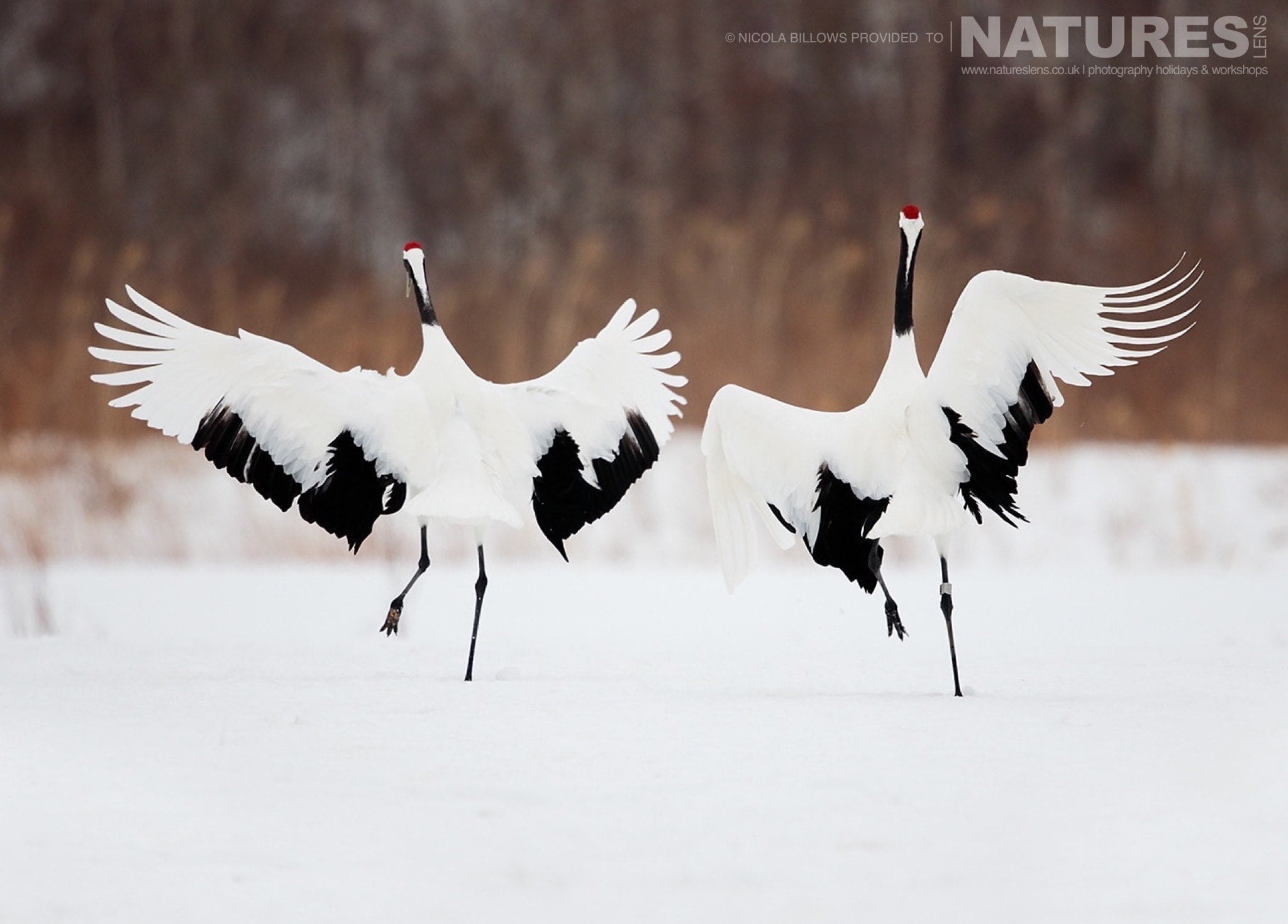
Red-crowned Crane is one of the trip’s defining subjects - pairs performing their courtship dance across the snowy Hokkaido landscape, worked from known roosting & display sites.
The dance itself is a genuine display behaviour rather than a random movement, with pairs bowing, leaping & calling in a sequence that repeats throughout the day - knowing the rhythm of it, rather than just reacting to movement, is what separates a lucky frame from a properly composed action shot.

Steller’s Sea Eagle & White-tailed Eagle
Steller’s Sea Eagle & White-tailed Eagle both feature working the pack ice & open water for fish, alongside Black-eared Kite & Ural Owl among the trip’s raptor & owl subjects.
Sessions here run from a boat working slowly along the ice edge, watching for eagles converging on a fish before it’s fully out of the water - a fast burst rate & a pre-focused long lens both matter more here than almost anywhere else on the trip.

Japanese Macaque (Snow Monkeys)
Japanese Macaque - the famous snow monkeys of Jigokudani - sit chin-deep in hot spring water while snow settles on their fur, one of the most recognisable images in wildlife photography & a core part of the itinerary.
The steam rising off the water in cold air gives a genuinely different photographic problem to the crane & eagle sessions - often soft, diffused light & a real risk of lens fogging, so working quickly between wipes & choosing your angle on the steam itself becomes part of the technique.

Hokkaido’s Other Winter Wildlife
Ezo Red Fox, Ezo Sika Deer, Ezo Flying Squirrel, Ezo Red Squirrel, Ural Owl, Whooper Swan & Long-tailed Tit round out the itinerary between the trip’s headline set-piece subjects.
These smaller encounters tend to happen between the bigger, planned sessions - a fox crossing a snowy track, or a Whooper Swan lifting off a partially frozen lake - & are as much about staying alert during transfers as arriving at a specific location expecting them.
Working Three Subjects, Three Techniques
Few trips in the series ask you to switch technique as completely, or as often, as this one.
The cranes reward a longer lens & a wide aperture to isolate a pair against clean snow; the sea eagles need a fast shutter & continuous autofocus tracking a bird converging on a fish at speed; the snow monkeys are almost the opposite, often shot wider to include the steam & the hot spring setting rather than isolating a tight portrait.
Packing for all three, & being ready to switch between them within the same day, is part of what makes this trip feel like three separate photography disciplines rather than one continuous safari.
When to Visit Japan
Our current departure runs across February, right at the heart of the Hokkaido winter. This is when the pack ice is at its most extensive for the sea eagle sessions, the cranes are deep into their courtship display season, & the snow monkeys spend the most time in the hot springs to escape the cold - all three headline subjects are at their photographic peak within the same narrow window, which is exactly why the trip is timed this way rather than spread across the winter.
Planning Your Trip to Japan
Hokkaido in February is genuinely cold, with temperatures regularly well below freezing, especially on the boat sessions working the pack ice at dawn. Layering matters more here than almost anywhere else in the series - the difference between a comfortable four-hour session on deck & a miserable one is almost entirely down to preparation rather than luck with the weather. David & Ian brief every guest on exactly what to bring before departure, from hand warmers to appropriate footwear for icy boardwalks around the crane & monkey sites.
Because the itinerary moves between Hokkaido & Honshu, travel days are built into the schedule rather than squeezed between shoots, which keeps the pace sustainable across a full 13 nights. It also means kit needs to cope with big temperature swings - from sub-zero mornings on the ice to the steamy, humid air right at the edge of the hot spring where the snow monkeys sit, sometimes within the same day.
Group size on this trip stays deliberately small, since several of the sessions - the boat work on the pack ice especially - only accommodate a limited number of photographers at once without everyone getting in each other’s way. That intimacy is part of the appeal: two guides across a small group means genuinely personal attention on technique & positioning at every one of the headline locations, rather than a large tour group working around a single vantage point.
Join Us in Japan
Japan rewards photographers who want a small number of genuinely spectacular, visually distinct set-piece subjects worked properly over an extended trip, rather than a broad but thin checklist.
With David & Ian guiding together, you get two experienced eyes on every session - one managing positioning & light while the other reads behaviour, which matters when a display sequence or a feeding pass only lasts a few seconds.
Get in touch if you have questions about the trip, or head straight to the Japan destination page to see current availability.
Plan your Japan photography holiday
Explore our Japan wildlife photography holidays, compare more Asia wildlife photography holidays, & meet the NaturesLens photography guides who lead our small-group trips.