Białowieża Forest straddles the border between Poland & Belarus, a genuine relic of the primeval woodland that once covered most of lowland Europe - & one of the last places on the continent where European Bison still roam wild in real numbers.
For the current trip list, see our Poland wildlife photography holidays; you can also explore more nature photography in Europe.
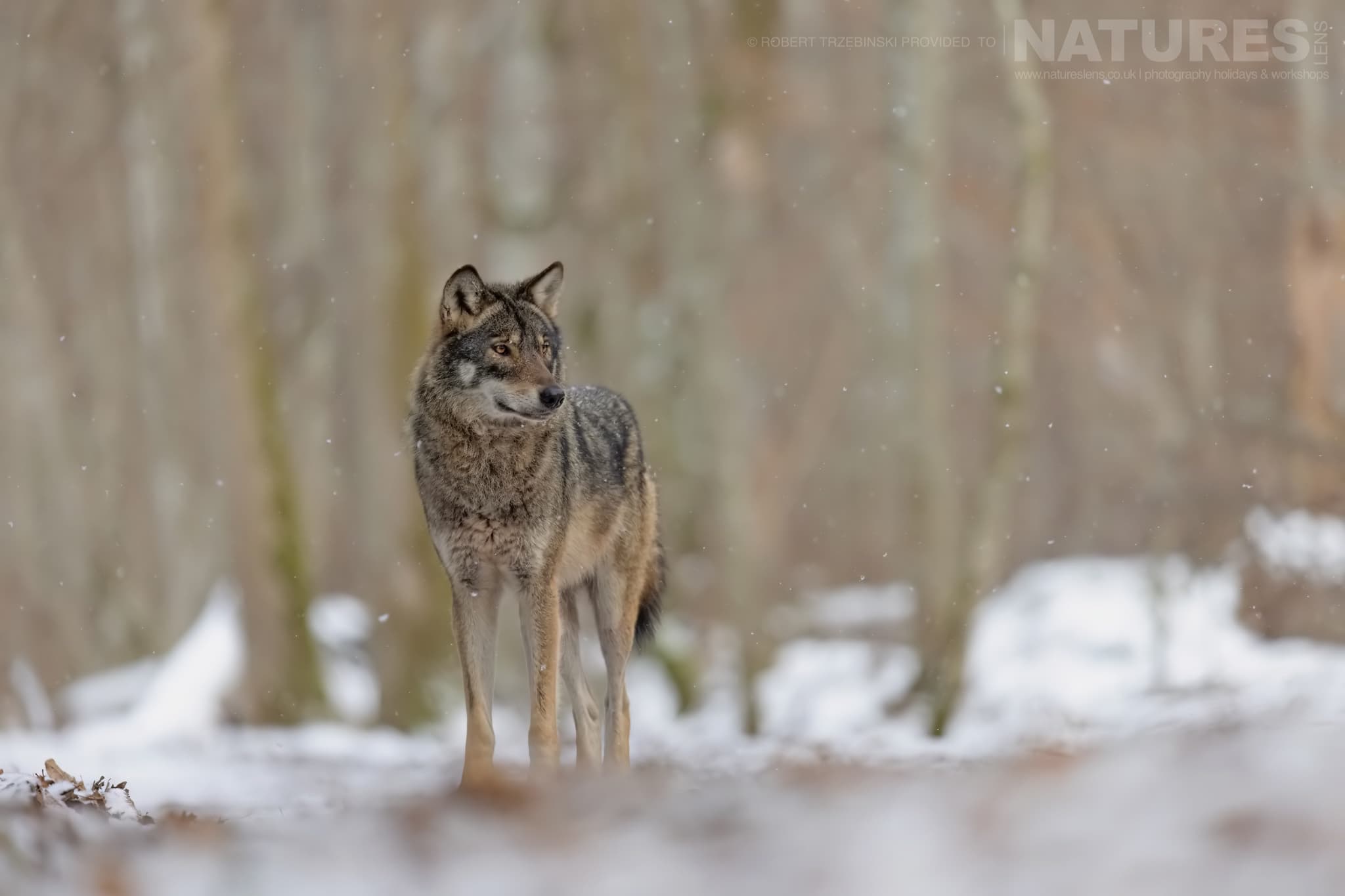
Beyond the bison, the forest holds White-tailed Eagle, Common Buzzard, & an elusive population of wolves that occasionally cross a trail or call at dusk. David Miles guides the trip, drawing on years of tracking bison herds & working the forest’s network of hides through the depths of a Polish winter.
What makes it work is the combination of genuine ancient forest & a deep midwinter setting - snow on the ground makes tracking bison & other mammals considerably easier, & the bare winter canopy opens up sightlines that would be impossible in summer foliage.
Our Poland Photography Holiday
We run one small-group trip to Poland, guided by David Miles:
10th - 17th Jan 2027 - Wildlife of Białowieża Forest
6 nights | from £3,249 | Medium - Balanced Days with Moderate Activity
Working a mix of forest tracking on foot & fixed hides, with European Bison as the headline subject, White-tailed Eagle & Common Buzzard overhead, & a genuine chance of wolf sign or a distant sighting.
More info on Wildlife of Białowieża Forest
Want to know more before booking? Get in touch & we’ll talk you through the winter forest conditions, the daily routine, & what a realistic bison sighting actually looks like.
A Conservation Success Story
European Bison were hunted to extinction in the wild by 1927, surviving only in a handful of zoo & private collections across Europe. Białowieża was the site of one of the earliest & most successful reintroduction programmes, & the forest now holds the largest free-ranging population of the species anywhere in the world.
That history adds real weight to an encounter here - every bison seen on this trip is a descendant of a small founder population saved from total extinction less than a century ago, & the forest’s recovery is considered one of European conservation’s genuine success stories.
What You’ll Photograph in Poland
European Bison
Standing over a tonne, Europe’s heaviest land mammal moves through the snow with a quiet, deliberate confidence that makes for genuinely powerful images.
Białowieża holds one of the last genuinely wild European Bison populations left in Europe, animals that were extinct in the wild by the early twentieth century & have only been reintroduced here through decades of careful conservation work. Encountering one in deep snow, steam rising off its back in the cold air, is among the most memorable wildlife moments in the whole series. See more in our Mammals photo archive.
Because these are genuinely wild, free-ranging animals rather than a managed herd in an enclosure, David’s tracking skill & knowledge of current herd movements through the forest makes a real difference to how close & how often the group encounters them.
White-tailed Eagle & Common Buzzard
Both raptors are resident through the winter, working the forest edges & open clearings in search of carrion & small mammals exposed by the snow cover. White-tailed Eagle in particular can be seen at surprisingly close range from some of the forest’s fixed hides.
A supporting cast of woodpeckers - Białowieża holds an unusually rich variety, including the elusive White-backed Woodpecker - rounds out the birdlife on offer for anyone willing to work the forest’s quieter corners between bison sessions.


The Last Primeval Forest
Białowieża is one of the few remaining fragments of the lowland forest that once stretched across most of Europe, & that primeval character is obvious the moment you step off the trail - ancient oaks, fallen deadwood left to decay naturally, & a density of undergrowth that a managed commercial forest never develops.
Snow cover through January adds a stark, quiet beauty to the forest itself, & tracks left overnight by bison, deer, & wolves give a genuine sense of how much moves through the forest unseen after dark.
Why Winter Rather Than Summer
Białowieża can be visited year-round, but summer’s dense foliage makes tracking & spotting genuinely difficult compared with the open sightlines of a bare winter forest. Snow cover also holds a clear record of overnight animal movement, turning a cold morning’s walk into a readable story of who passed through & when.
The trade-off is comfort rather than opportunity - a Polish January asks more of a photographer’s clothing & stamina than a summer visit would, but the wildlife-watching conditions are considerably better for it.
When to Visit Poland
Our current departure runs in January, deep in the Polish winter when snow cover is at its most reliable & tracking conditions are at their best. Bison also tend to concentrate more predictably around known feeding areas during the harshest part of winter, improving the odds of a close encounter.
Planning Your Trip to Poland
A telephoto lens in the 300mm to 500mm range covers most encounters well, given the working distances typical of both the bison tracking & the raptor hides. A wider lens is worth carrying too, for the forest landscape itself in falling or fresh snow.
Polish winters are genuinely cold, regularly well below freezing, so warm, waterproof layers & sturdy, insulated boots suited to walking on snow & ice are essential. Days combine spells of active tracking on foot with longer, stiller periods in a hide, so clothing needs to work for both.
Warsaw is the usual arrival airport, with a road transfer onward to the Białowieża region used for the trip.
A Trip Built Around Patient Tracking
Unlike the trip’s raptor hides, bison encounters here rely on active fieldcraft rather than a fixed feeding station - reading tracks, listening for movement, & approaching quietly through the trees. David briefs the group on forest etiquette before each outing, since a careless approach can end a promising encounter before it properly begins.
What to Pack Beyond the Camera Bag
Insulated, waterproof boots with genuine ankle support matter more here than almost anywhere else in the series, given the combination of deep snow, uneven forest ground, & several hours of walking each day. Trekking poles are worth considering for the same reason.
A thermos for a hot drink & high-energy snacks are worth carrying on the longer tracking outings, since sessions can run well past a normal lunch stop once the group is on a promising set of fresh tracks.
A Trip for Photographers Who Enjoy Fieldcraft
Because bison encounters depend on active tracking rather than a guaranteed feeding station, this trip suits photographers who enjoy the process of fieldcraft as much as the resulting image. David involves the whole group in reading tracks & signs through the forest, turning the search itself into as much a part of the experience as the eventual sighting.
Join Us in Poland
A conservation success story, a fragment of genuine primeval forest, & resident eagles overhead - this is one of the more thoughtful, quietly rewarding trips anywhere in the series.
Few places in Europe let you track a genuinely wild bison herd through snow-covered primeval forest, with resident eagles & the chance of wolf sign thrown in.
David’s years of experience reading this specific forest is what turns a week of winter tracking into a genuinely productive trip.
Get in touch if you’d like to know more, or head straight to the Poland destination page to see current availability.
Plan your Poland photography holiday
Explore our Poland wildlife photography holidays, compare more nature photography in Europe, & meet the NaturesLens photography guides who lead our small-group trips.