
The Qing-Zang Plateau is the highest, most remote wildlife habitat on the trip’s entire itinerary - a high-altitude wilderness of open grassland & bare mountain where Pallas Cat, Tibetan Wild Yak, & Tibetan Wolf all survive in conditions few other large animals could tolerate.
For the current trip list, see our Tibet wildlife photography holidays; you can also explore more Asia wildlife photography trips.
David Miles & Pui Hang Miles jointly guide this trip, between them holding years of experience working at extreme altitude & tracking some of the most elusive mammals found anywhere in Asia.
What makes it work is the plateau’s sheer scale & openness - unlike a forest environment, animals here can often be spotted at genuine distance across open ground, giving time to plan an approach rather than relying on a sudden, close encounter.
Our Tibet Photography Holiday
We run one small-group trip to Tibet, guided by David Miles & Pui Hang Miles:
10th - 25th Nov 2027 - Tibetan Wildlife of the Qing-Zang Plateau
14 nights | from £9,499 | Medium - Balanced Days with Moderate Activity
An extended high-altitude itinerary across the plateau, built around Pallas Cat, Tibetan Wild Yak, & Tibetan Wolf, with genuine time built in at altitude for the patient searching this kind of open-country tracking demands.
More info on Tibetan Wildlife of the Qing-Zang Plateau
Want to know more before booking? Get in touch & we’ll talk you through the altitude acclimatisation plan, the accommodation, & what fourteen nights on the plateau actually involves.
What You’ll Photograph in Tibet
Pallas Cat
Its flattened face & low-set ears are thought to be adaptations for stalking prey across open ground without breaking its silhouette, & seeing that adaptation in person is a genuine thrill for anyone who has followed the species from photographs alone.
Pallas Cat is one of the most sought-after small cats in wildlife photography, a stocky, dense-furred species perfectly adapted to cold, high-altitude terrain & notoriously difficult to locate across most of its range. The plateau’s open ground gives a genuine, if hard-won, chance of a sighting that eludes photographers in almost every other part of the world. See more in our Mammals photo archive.
Because the species relies so heavily on staying still & blending into rocky, broken ground, patient scanning with a spotting scope before ever raising a camera is central to how David & Pui Hang work each day’s search.

Tibetan Wild Yak & Tibetan Wolf
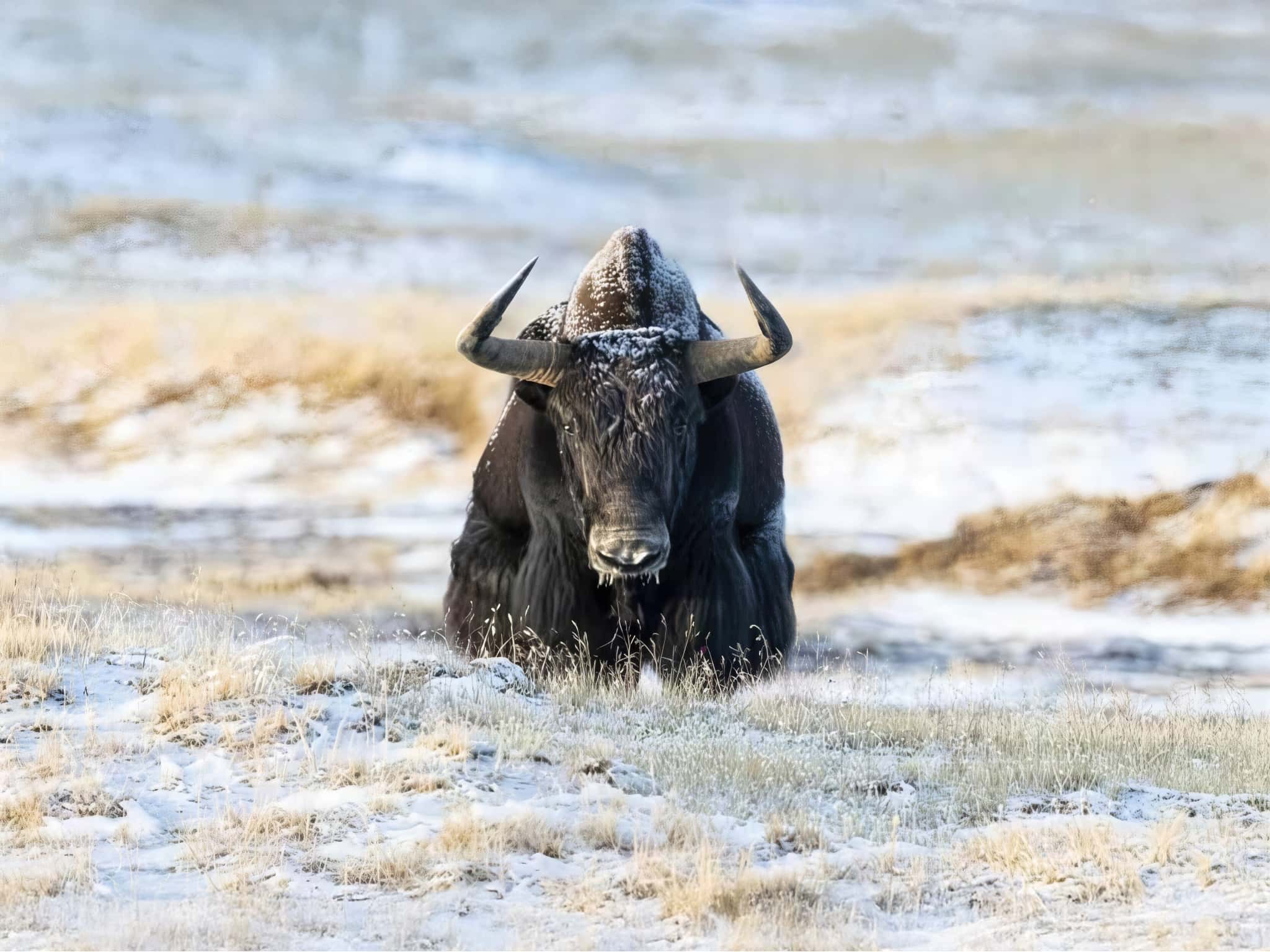
A distant herd of Wild Yak silhouetted against the plateau’s mountain backdrop is one of the trip’s more accessible highlights, while a genuine Tibetan Wolf sighting remains one of the rarest & most prized images across the entire series.
Wild Yak is a genuinely different animal from its domesticated relatives seen throughout the region - larger, warier, & found only in the plateau’s most remote reaches. Tibetan Wolf, adapted specifically to this high, open habitat, is a rarer & more opportunistic sighting, rewarding photographers who keep scanning the wider landscape even while focused on a closer subject.
Both species demand respectful working distances given the openness of the terrain & the animals’ natural wariness, so a longer lens matters more here than on almost any other trip in the series.


The Roof of the World
Few photographers forget their very first view across the vast, open plateau.
Much of the plateau sits above four thousand metres, & the landscape itself - vast open grassland framed by snow-capped peaks & impossibly clear light - is as much a reason to visit as any single species. Few environments left on Earth offer this scale of untouched, high-altitude wilderness.
Local Tibetan communities & their livestock herds share this landscape with the wildlife, adding a genuine human element to the wider trip beyond the animals themselves.
A Landscape of Extremes
Daytime sun at this altitude can feel surprisingly warm even as the air temperature stays low, while a clear night can drop dramatically once the sun sets - a range of conditions that demands genuinely flexible, layered clothing across a single day.


Why Fourteen Nights at This Altitude
Altitude sickness is a genuine risk anywhere on the plateau, & a shorter trip would leave little margin for proper acclimatisation before serious searching begins. Fourteen nights allows a gradual ascent profile, with rest days built in at key points, so the group is properly adjusted before spending long days at the plateau’s highest, most productive search areas.
The extended itinerary also reflects how genuinely difficult these three species are to find - multiple days of patient scanning are often needed before a Pallas Cat or Tibetan Wolf sighting comes together, & a shorter trip would risk leaving with none of the headline species photographed at all.
When to Visit Tibet
Our current departure runs in November, after the summer tourist season has ended & as animals descend to slightly lower elevations ahead of the harshest winter conditions, improving the odds of sightings compared with the height of summer.
Planning Your Trip to Tibet
A telephoto lens in the 400mm to 600mm range is essential given the typical working distances across open plateau terrain, & a spotting scope is genuinely useful for locating distant animals before deciding whether an approach is worthwhile.
Altitude & cold both demand serious preparation - genuinely warm layered clothing, a good sleeping system, & realistic physical fitness all matter more on this trip than almost anywhere else in the series. Medication for altitude sickness is worth discussing with a doctor ahead of travel, & a gradual pace through the early part of the trip is built in specifically to reduce that risk.
Lhasa is the usual arrival point, with several days of acclimatisation there before the group moves further out onto the plateau itself.
What to Pack Beyond the Camera Bag
A genuinely warm down jacket, thermal base layers, & insulated boots are essential, given how quickly temperatures fall once the sun drops behind the surrounding peaks. A good pair of sunglasses is important too, since the plateau’s thin air & near-constant clear skies make UV exposure considerably stronger than at lower altitudes.
Battery life drops noticeably in the cold, so spare batteries kept close to the body are worth carrying on every outing, along with a headlamp for the long nights at camp.
Two Guides, One Extreme Environment
Having both David & Pui Hang on this trip means the group always has a guide focused on the immediate search while the other manages logistics, altitude welfare, & the wider group - a genuinely useful division of attention given how demanding this environment is compared with anywhere else in the series.
A Trip for Determined Photographers
This is one of the more physically & logistically demanding trips in the whole series, & it suits photographers who specifically want these three rare, high-altitude specialists enough to commit real time & effort to the search. David & Pui Hang are candid about the odds & the effort involved from the very first conversation about booking.
Join Us in Tibet
Three of Asia’s most elusive high-altitude specialists, a genuinely vast & untouched landscape, & an itinerary built to give the search a fair chance - this is one of the most ambitious trips anywhere in the series.
Few places on Earth offer a realistic chance at Pallas Cat, Wild Yak, & Tibetan Wolf within a single high-altitude itinerary.
David & Pui Hang’s combined years of experience working this exact plateau is what turns an ambitious fourteen-night trip into a genuinely productive one.
Get in touch if you’d like to know more, or head straight to the Tibet destination page to see current availability.
Plan your Tibet photography holiday
Explore our Tibet wildlife photography holidays, compare more Asia wildlife photography holidays, & meet the NaturesLens photography guides who lead our small-group trips.