
The Iberian Lynx is, without much competition, the single hardest cat in Europe to photograph well, & that difficulty is exactly why the Sierra de &újar keeps a small but growing number of photographers coming back. This range of steep, scrub-covered hills in Andalusia, southern Spain, holds one of the last strongholds of a species that only a couple of decades ago numbered in the low hundreds worldwide, & our Iberian Lynx in Summer photography holiday, run from carefully positioned hides at dusk, has quickly become one of the trips guests talk about wanting to repeat. This is about why one encounter with this cat rarely feels like enough.

Why is the Iberian Lynx worth building an entire trip around?
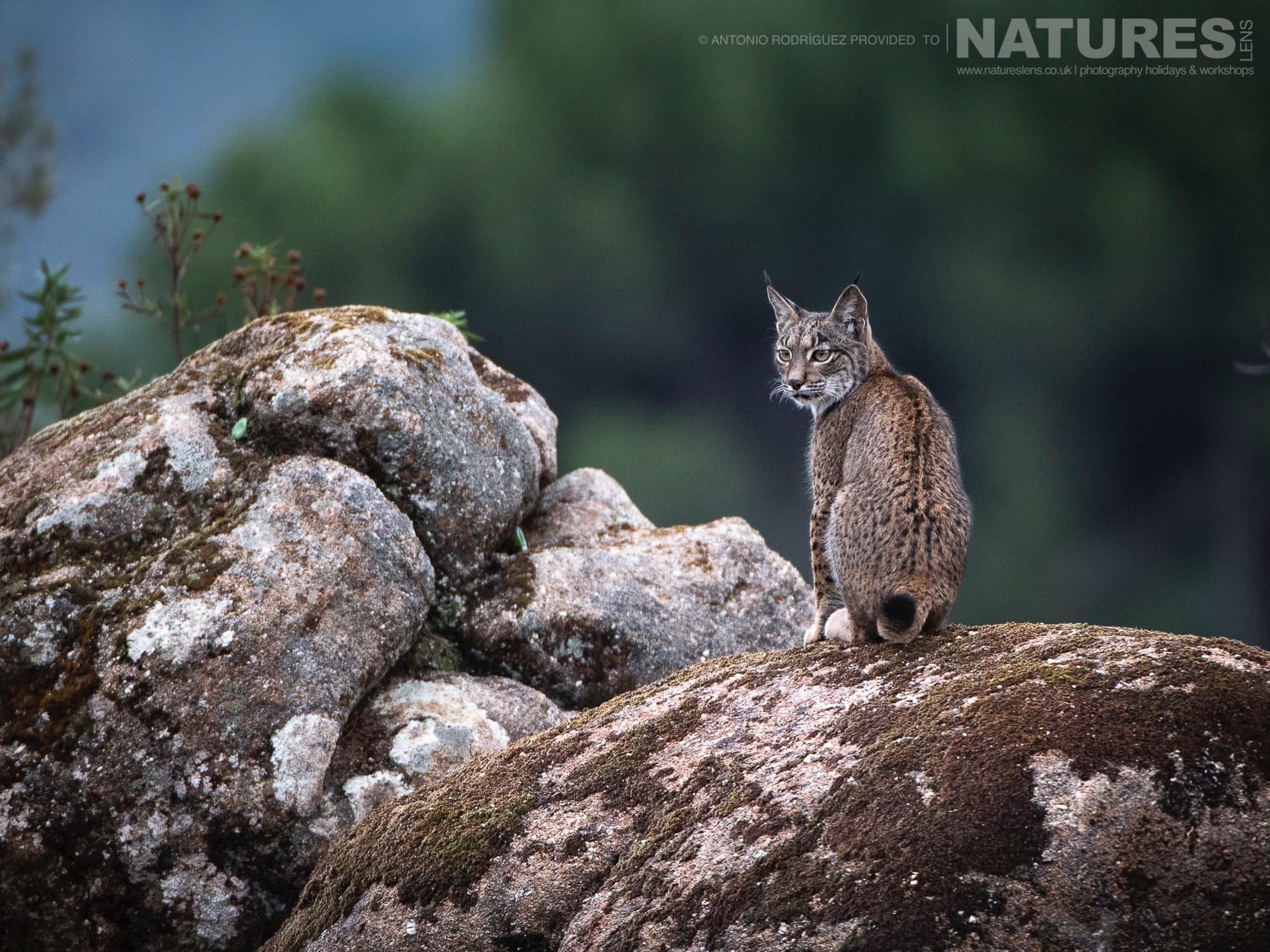
This is one of the rarest, most range-restricted wild cats on the planet, recognisable by its tufted ear points, bearded facial ruff & short, bobbed tail, & its recovery from the brink of extinction is one of the genuine conservation successes of recent European history. It relies almost entirely on healthy rabbit populations for prey, which ties it tightly to the specific mosaic of Mediterranean scrub & woodland that the Sierra de &újar’s rugged, low-disturbance terrain still provides. A lynx sighting anywhere in Spain is treated as a significant event; photographing one properly, in good light, with a clean background, is rarer still, & that rarity is precisely what makes the pursuit worth returning to rather than something to tick off once & move on from.
Why hides at dusk, rather than daytime drives?
Iberian Lynx are largely crepuscular, most active as daylight fades, & the sierra’s dense maquis vegetation makes daytime vehicle-based searching close to futile for a genuinely solitary, secretive predator this good at staying hidden. Working from fixed hides positioned at watering points & known crossing routes, built up over repeated seasons of local knowledge, gives a far better chance of a clean sighting than driving tracks hoping for a lucky glimpse, & it means the whole session is built around stillness rather than movement, watching the light fade across the scrub while staying alert for the particular way lynx move, low & deliberate, through cover.
What does “clean backgrounds” actually mean when the subject is this rare?
It would be easy, given how uncommon a lynx sighting is, to simply fire off frames the moment one appears regardless of composition, but that is not how we approach it. The hides are positioned specifically so that when a lynx does appear, it does so against open ground or soft, unbroken scrub rather than a tangle of branches that would compete with an animal this intricately patterned, & the low, warm light of a summer dusk in Andalusia gives exactly the kind of gentle backlight that a coat like this deserves. Getting both the position & the light right, on a subject that might appear for only a matter of minutes, is a genuinely different discipline to more forgiving wildlife photography elsewhere, & it rewards a guide who already knows precisely where & when to expect an animal to cross.
Why does patience matter more here than almost anywhere else?
A lynx encounter is never guaranteed, however good the hide position, & sessions can pass with nothing more than the sound of cicadas & the slow fade of Mediterranean dusk light across the hillside. That uncertainty is part of what makes a successful sighting feel so significant, & guests who understand & accept that uncertainty going in tend to get more from the trip than those hoping for a guaranteed encounter. The reward for that patience, when it comes, is watching one of the rarest cats on the planet move unhurried across open ground in fading light, entirely unaware of the hide’s presence, which is as close to a genuinely wild, undisturbed encounter as European wildlife photography currently offers.
July heat across Andalusia is considerable during the day, but the trip’s rhythm is built around that: quiet daytime rest gives way to hides being taken up well before dusk, timed so everyone is settled, still & silent long before the light starts to fade & lynx activity picks up. That discipline of arriving early & staying motionless, sometimes for two or three hours before anything happens, is as much a part of what this trip teaches as any camera technique, & it is a skill that carries over directly into hide-based photography anywhere else in the world. The reward, on the evenings it pays off, is watching the sierra’s scrubland turn gold, then rose, then blue, with a lynx somewhere out there in it, & that atmosphere alone is worth the wait even on the evenings the cat does not appear.
Who tends to get the most from this particular trip?
It suits photographers who are comfortable with genuine uncertainty in exchange for the chance at an exceptional, rare subject, & who enjoy the quiet discipline of hide photography over the more active pace of a safari or boat trip. The group is capped at six specifically to keep each hide session properly managed & quiet, since even small amounts of noise or movement can be enough to turn a cautious lynx away before it comes into range. It particularly suits photographers who already have a broad general wildlife portfolio & are looking for a genuinely difficult, specialist subject to add to it, rather than someone taking their first steps into wildlife photography.
So what keeps photographers coming back to Sierra de &újar?
It is the honest difficulty of the subject, & the knowledge that even a strong first encounter with an Iberian Lynx leaves you wanting a better one: sharper light, a cleaner background, more time before the animal moves on. That instinct sits alongside the broader case we make for wildlife photography in Spain in why photographers are drawn to Spain, & you can read more about the sierra’s habitat & this remarkable cat in our field guide to the Sierra de &újar. If you would like to talk through a July departure, get in touch & Pui Hang or David will explain how the hides are positioned & what patience the sessions genuinely require.