

I’ve been leading photography trips to Costa Rica for long enough now that I no longer bother packing the longest lens I own. That surprises most photographers before their first trip & it’s one of the first things I tell them once they’ve booked. Costa Rica doesn’t behave like the destinations most wildlife photographers cut their teeth on. It’s smaller than people expect, wetter than people expect, & the wildlife is often far closer than a safari vehicle would ever get you to a lion. What it demands in return is patience with light, comfort in humidity, & a willingness to sit still in one spot for far longer than feels natural at first.
What follows isn’t a brochure description of Costa Rica photography tours. It’s the version I’d give a photographer over a coffee before their first trip & the version I still find myself revising after every visit, because Costa Rica has a habit of teaching you something new even on your fifth or sixth trip through the same regions.
Why rainforest photography is harder than it looks
People arrive expecting rainforest photography to be straightforward because the wildlife is supposedly “everywhere.” It is, in the sense that biodiversity in Costa Rica is genuinely remarkable for such a small country. But density of species doesn’t translate into ease of photography, & this is the first thing that catches people out. The canopy swallows light unevenly. A howler monkey forty feet up might be lit like a spotlight one moment & a silhouette the next, simply because a cloud has shifted or the sun has dropped behind a neighbouring tree. Contrast in rainforest is brutal & unforgiving of the wrong exposure decision, & you get very little warning before you’ve blown your highlights or buried your shadows.
I’ve found that photographers who’ve spent years photographing open landscapes, or savannah wildlife where the light is broad & consistent, often need a few days to recalibrate in Costa Rica. You’re not photographing a lion in golden light on an open plain. You’re photographing a trogon through three layers of foliage, in light that’s changing every few minutes, at a distance where your depth of field has to do real work. It’s a different discipline, & it rewards a different kind of preparation.
Is Costa Rica good for wildlife photography?
Yes, & in my experience it’s among the best places in the world to start a serious wildlife photography habit. Rainforest, cloud forest, wetland & coastal habitats all sit within a few hours of each other, which means a single trip can produce an extraordinary range of images without the punishing travel days you’d face in somewhere like Brazil or the Congo Basin.
That compactness is Costa Rica’s real advantage, & it’s one that people underestimate until they’ve experienced the alternative. I’ve worked in destinations where a single transfer between photography sites eats an entire day. In Costa Rica, you can photograph hummingbirds at a cloud forest feeder in the morning & be watching basilisk lizards along a lowland river by early afternoon. The variety isn’t a marketing claim, it’s a logistical reality that comes from the country’s geography, & it’s the reason our Ultimate Costa Rican Wildlife holiday can move between so many habitats without ever feeling rushed.
Why Costa Rica rewards repeat visits
I’ve now lost count of how many times I’ve been back, & every single trip I come home with images I couldn’t have anticipated. This is partly down to seasonality & partly down to something less obvious, which is that rainforest wildlife behaves differently depending on rainfall patterns that shift subtly from year to year. A location that produced spectacular tanager activity in one visit might be quiet the following year, while a trail you’d previously written off turns out to be exactly where the action is.
What I’ve learnt is that Costa Rica doesn’t reward the photographer looking to tick a species off a list & move on. It rewards the photographer willing to come back & build a deeper understanding of how the seasons, the rainfall & the individual habitats interact. I suspect this is why so many of the photographers who join us once end up coming back for a different holiday within a year or two, because they’ve realised there’s another whole layer of Costa Rica they haven’t touched yet.
Why small groups change what’s possible
Rainforest trails are narrow. Boats on lowland rivers hold a handful of people comfortably & nobody more. Noise carries in a way that’s hard to appreciate until you’ve watched a group of six photographers spook a resting sloth that a group of six would never have disturbed had they moved quietly & spread out properly. This is the practical reason we keep our groups small on every Costa Rica trip we run, & it’s not a marketing line, it’s a direct response to how wildlife in these habitats actually behaves around people.
Over several visits I’ve watched the difference a smaller group makes to species like white-faced capuchin, which are intelligent, alert & quick to change behaviour around a crowd. A quiet, patient group of six will often be tolerated at a distance a group of fifteen would never achieve. The same is true of the three-toed sloth & the basilisk lizard, both of which rely on stillness as a defence & will simply stop moving, or move away, the moment they sense too much disturbance.
Why are small groups better for wildlife photography?
Small groups reduce noise, movement & the cumulative disturbance that builds up around wildlife over the course of a session. They also let a guide position each photographer individually for the best angle & background, rather than managing a crowd from a single vantage point. In practice this means longer, calmer encounters & noticeably stronger images.
Why photographers underestimate hummingbirds
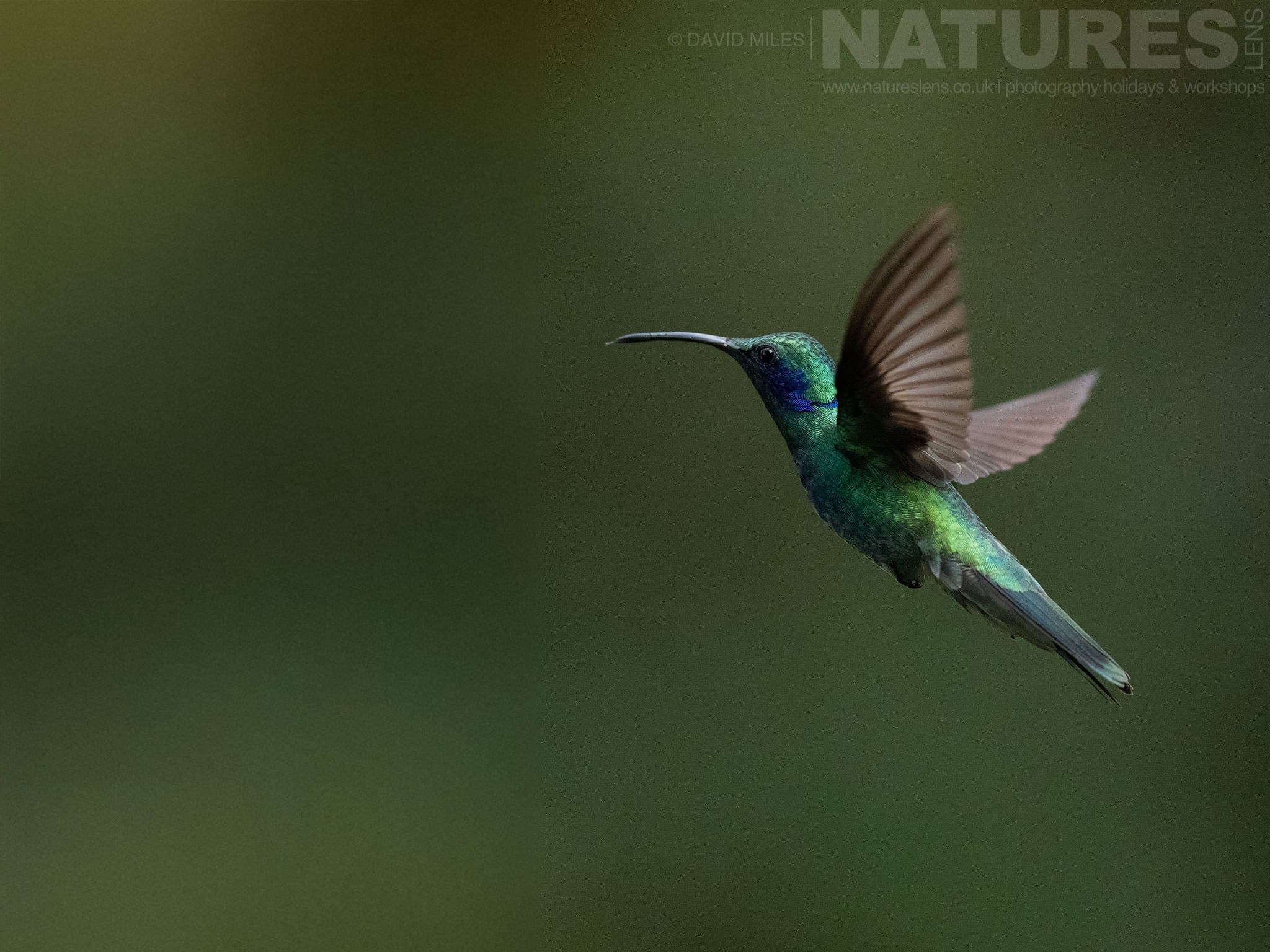
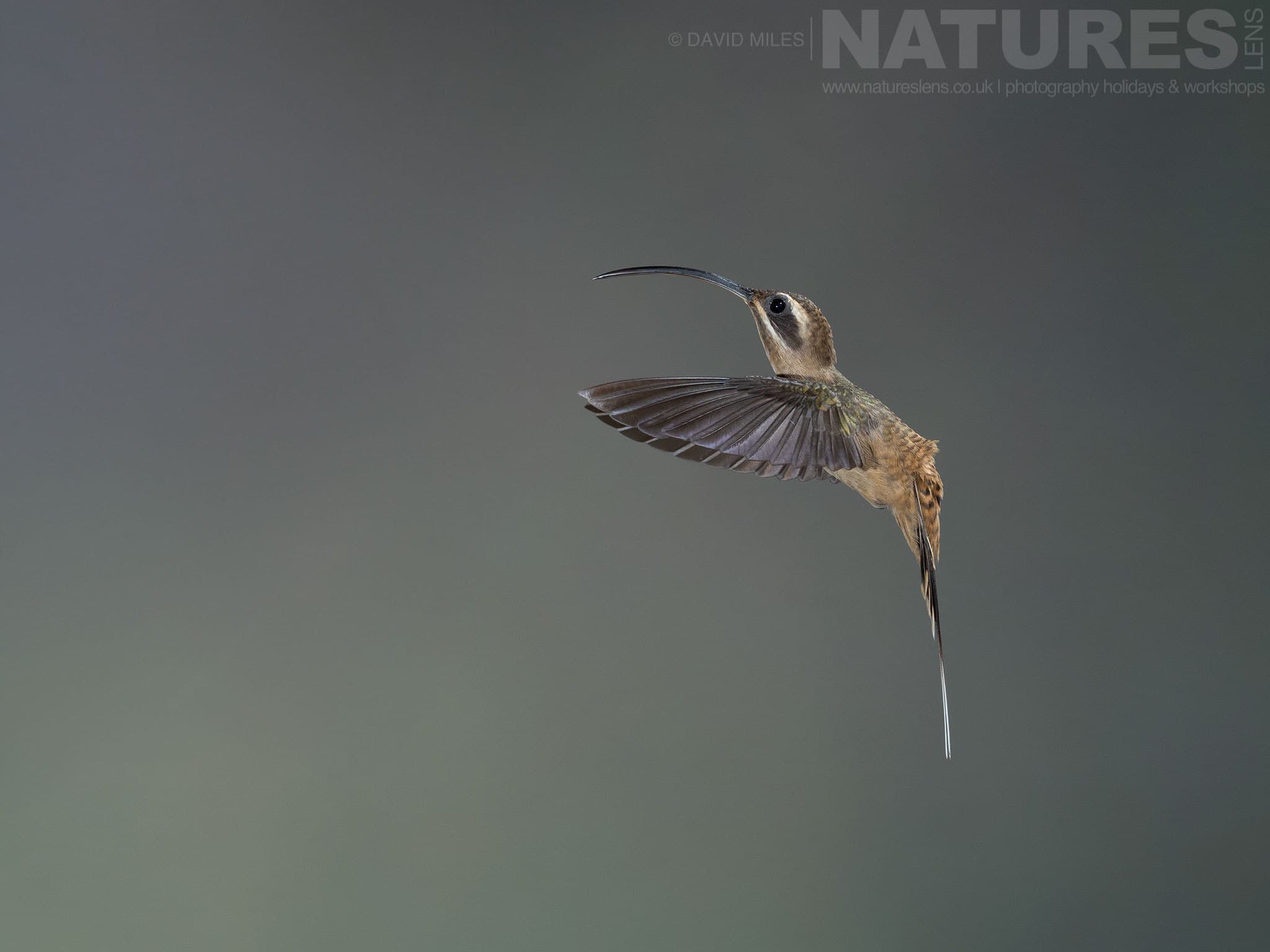
Almost everyone arrives thinking hummingbirds will be the easy part of the trip. They’re wrong, & I say that having made the same assumption myself on my first visit years ago. Hummingbirds move at a speed that punishes sloppy technique, & the light around most feeding stations changes constantly as birds pass in & out of shade. Freezing a wingbeat cleanly, with a clean background & a natural perch or flower rather than an obvious feeder in the frame, takes far more skill & far more patience than the birds’ apparent abundance suggests.
What surprised me the first time I properly worked a hummingbird session in the cloud forest was how much the best images came from understanding individual bird behaviour rather than simply firing away at anything that moved. Certain species return to the same perch repeatedly. Certain territories are defended aggressively, which produces the kind of dramatic interaction shots that separate a genuinely strong hummingbird portfolio from a folder of pretty-but-similar frames. I’ve discovered that photographers who slow down & watch a single feeding station for twenty minutes before lifting a camera come away with far better work than those who move constantly between stations chasing every species they can find.
This is also where I see the difference between photographing species & photographing behaviour most clearly. A hummingbird in flight is a nice record. Two hummingbirds contesting the same flower, wings locked, beaks forward, is a photograph with a story. Costa Rica’s cloud forests give you the time & the density of activity to wait for the second image rather than settling for the first.
How rainforest photography changes the way you think about light
I mentioned earlier that contrast under a rainforest canopy is unforgiving, but there’s a more interesting point buried in that, which is how much rainforest photography changes your relationship with light generally. On the plains of Africa you’re often waiting for golden hour because the rest of the day is simply too harsh. In the rainforest, the canopy is already doing a version of that filtering work for you all day long, but unevenly & unpredictably, which means you spend far more of your time reading light on a frame-by-frame basis rather than relying on the clock.
I’ve found that this makes photographers noticeably better at reading light everywhere else once they’ve spent a week working under a Costa Rican canopy. You start noticing reflected light bouncing off wet leaves, the way a shaft breaking through a gap in the canopy can be used deliberately rather than avoided, & how positioning a subject against a dark background of shadowed understorey can lift a portrait far more than any amount of post-processing. Guides on our trips spend a lot of their time doing exactly this, moving photographers a few feet to the left or right to catch a gap in the foliage that changes the entire image, rather than rushing to get closer to the subject.
When is the best time to photograph wildlife in Costa Rica?
There isn’t a single best time, & in my experience that’s actually good news rather than a complication. The green season brings lush vegetation, dramatic skies & a surge in amphibian activity, while the drier months tend to improve trail access & general comfort. Rather than treating Costa Rica as a single-season destination, we design each itinerary around the specific wildlife & locations that matter most for that trip.
Why frogs become one of the highlights of the trip
Nobody books a Costa Rica trip because they’re desperate to photograph frogs. Almost everyone leaves talking about the frogs more than anything else. I’ve seen this pattern repeat itself so consistently over the years that I now warn people about it before we leave, half as a joke & half because it’s genuinely true.
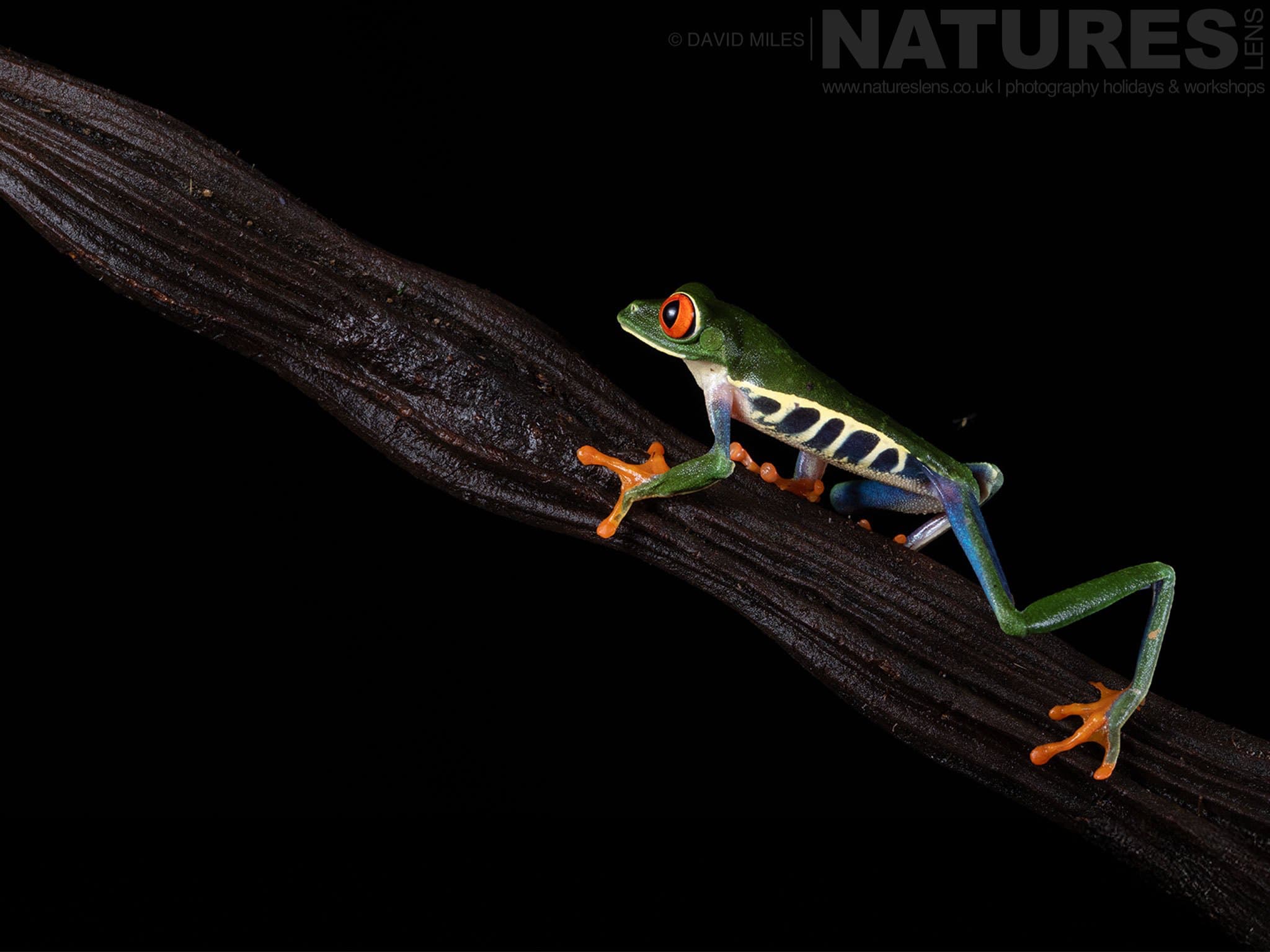
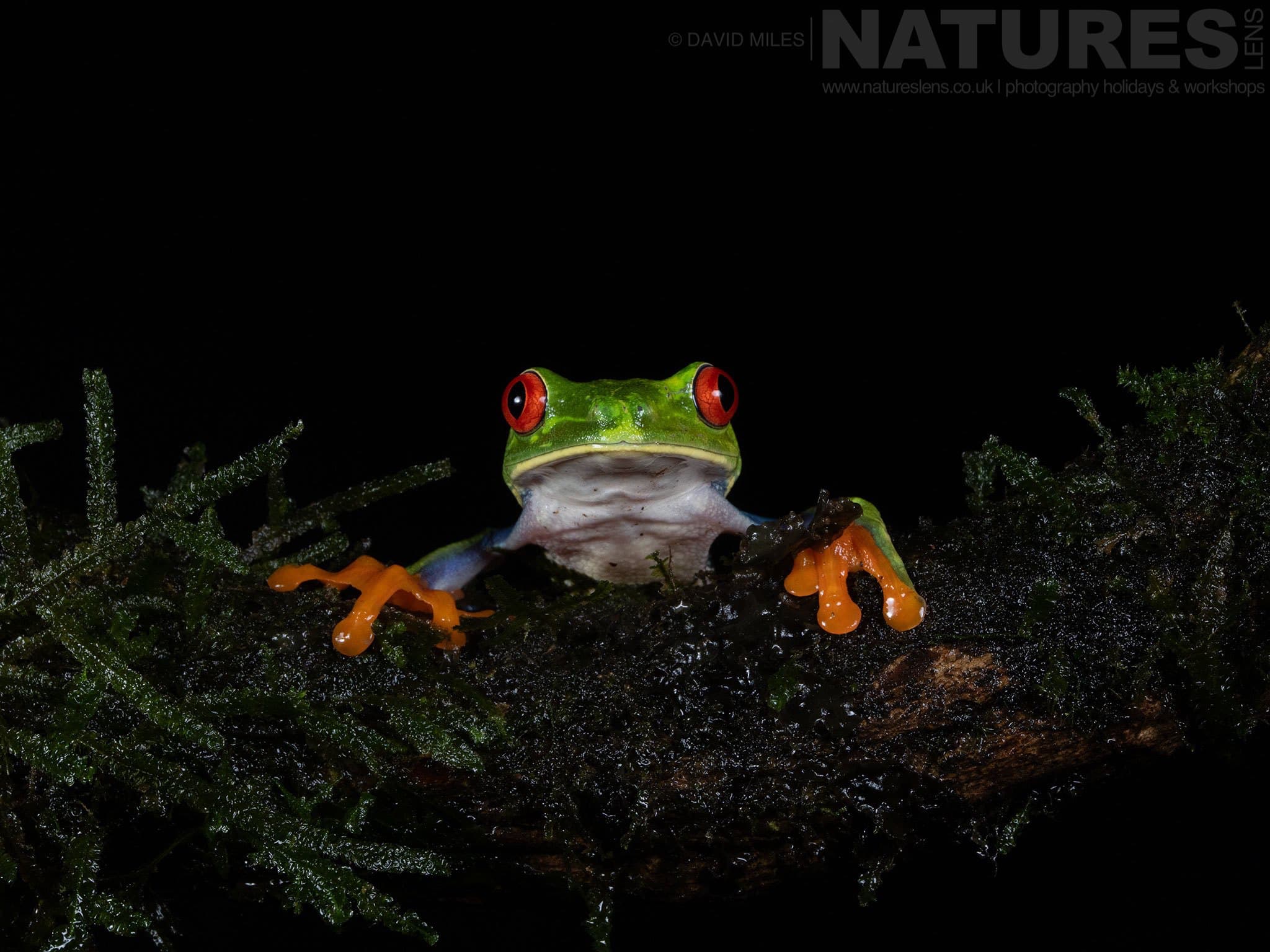
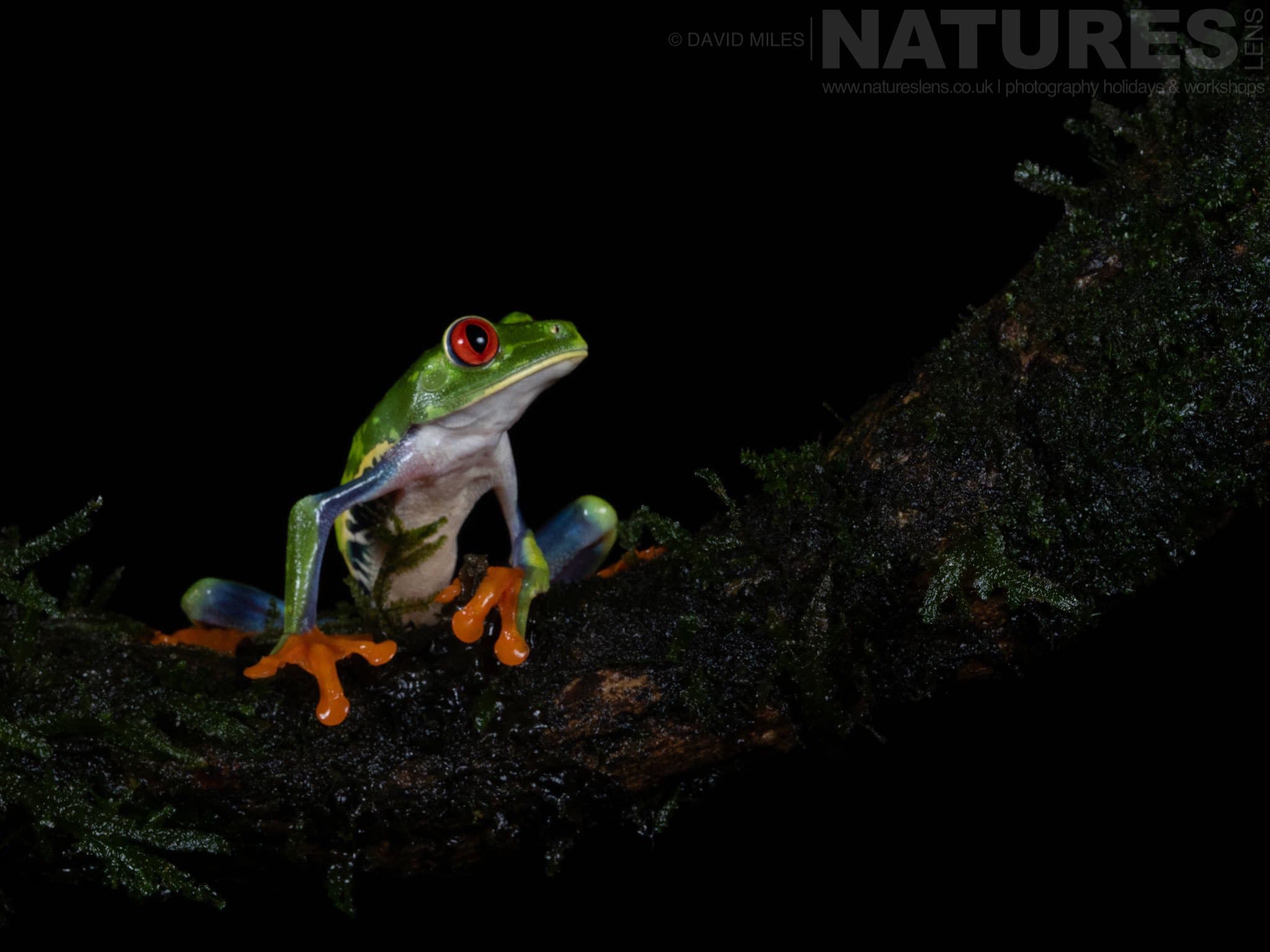
Part of it is simply how photogenic the subjects are. The red-eyed tree frog is, without much competition, one of the most striking animals in the country, & seeing one perched on a leaf with those improbable red eyes catching the flash for the first time tends to produce an audible reaction even from photographers who’ve been doing this for decades. But the deeper reason frogs become such a highlight is the nature of the sessions themselves. Night walks after rain slow everyone down. There’s no rushing between locations, no long lens work at a distance, just quiet, careful macro photography with controlled lighting, often within touching distance of the subject. It’s a completely different rhythm to the rest of the day, & I think photographers respond to that change of pace as much as they respond to the frogs themselves.
Over several visits I’ve also come to appreciate how much skill sits behind a good frog photograph that looks effortless. Flash placement matters enormously, because a single harsh point-source light will flatten the animal & blow out the eyes, while a softened, off-camera light held at the right angle brings out the translucency of the skin & the texture of the leaf. Small groups matter here too, because a single guide can only manage lighting carefully for a handful of photographers at once, & the strawberry poison dart frog in particular rewards a slow, considered approach rather than a scrum of people trying to get the same angle.
What wildlife can you photograph in Costa Rica?
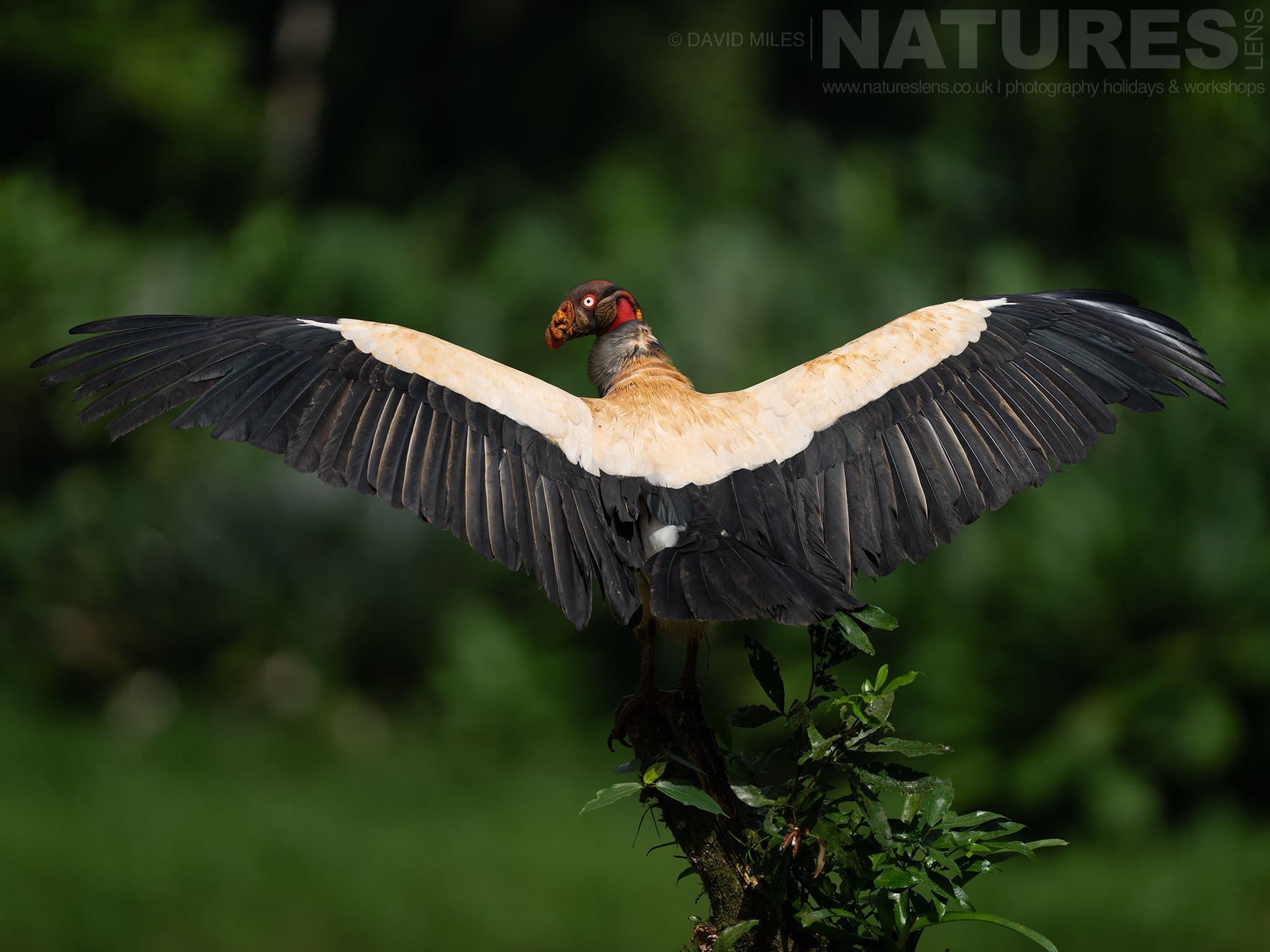
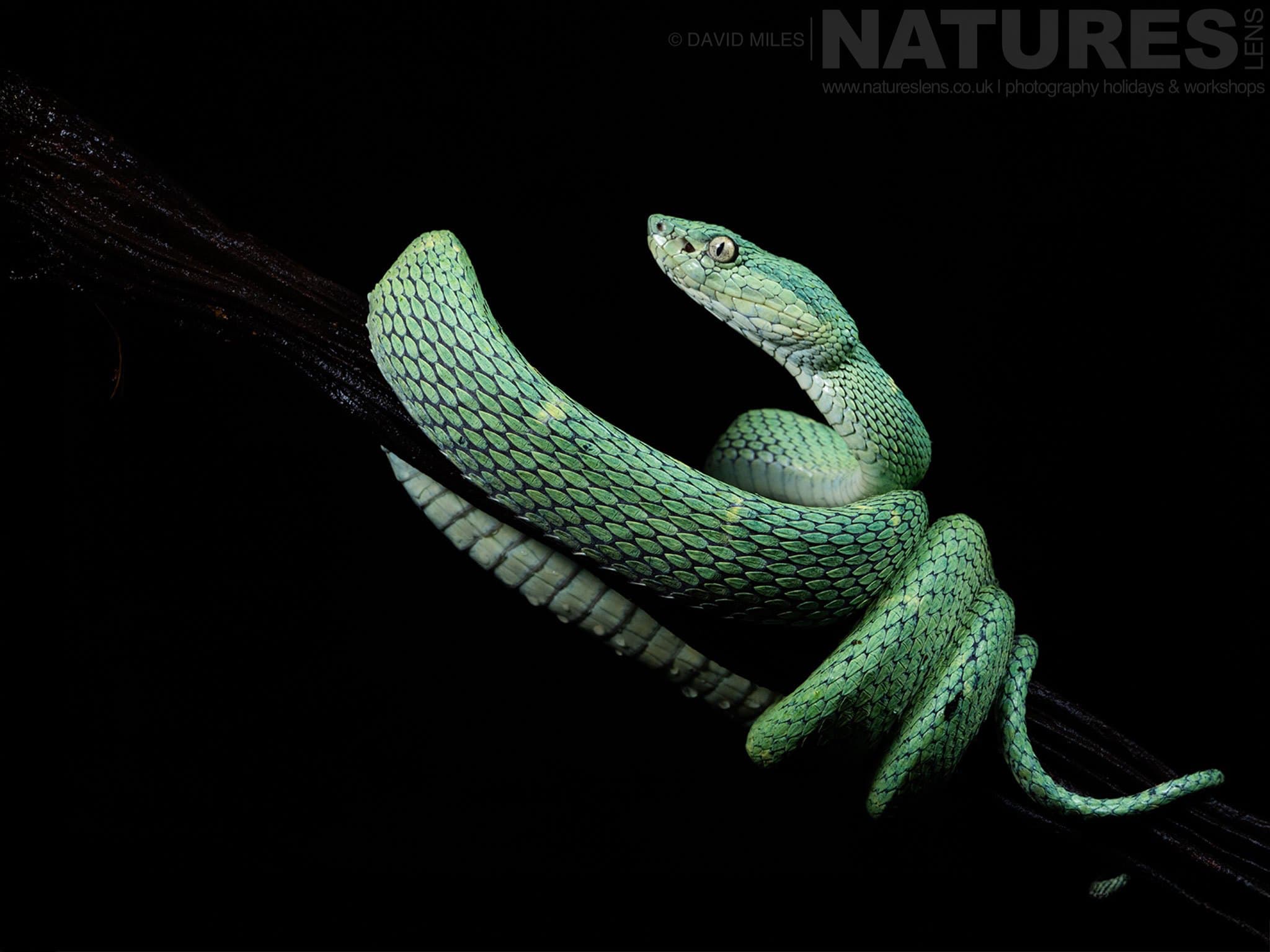
A single trip can realistically produce images of toucans, hummingbirds, tanagers, motmots & trogons, alongside mammals such as capuchins, howler & spider monkeys, sloths, coatis & kinkajous. Night sessions add tree frogs, glass frogs, poison dart frogs, snakes & a wide range of macro subjects, all within a single, compact itinerary.
Why photographers chase species instead of behaviour, & why that’s a mistake
Sloths are the clearest example I know of a species that looks easy to photograph & isn’t. Photographers arrive expecting the slow movement to make the job simple, & then discover that a sloth wedged into a fork of branches, backlit against a bright sky, with a tangle of vines across its face, is actually one of the harder subjects on the entire trip. Getting a genuinely clean sloth image, one with a visible face, a workable background & decent light, often takes far longer than photographing a howler monkey moving through the canopy at speed.
I’ve always thought this is where the species-chasing mentality lets photographers down. If your only goal is “I photographed a sloth,” almost any frame will do & you’ll move on within minutes. If your goal is a genuinely strong image, you need to wait for the animal to shift position, for a branch to move, for the light to change, or simply for a better angle to present itself as you or the guide relocate. That waiting is where the good pictures come from, & it’s also where the difference between photographing a species & photographing behaviour becomes obvious. A spider monkey swinging between trees, an agouti caching food, a coati working through leaf litter with its nose down, these are behaviour shots, & they’re consistently more interesting than a static record of the same animal sitting still.
What I’ve learnt from watching this play out trip after trip is that patience is the actual skill being tested here, not technical camera knowledge. Mammal photography in Costa Rica rewards photographers who are comfortable simply watching for a while before lifting the camera at all.
Why spending longer in fewer places produces stronger images
One of the clearest lessons Costa Rica has taught me is that moving fast between locations rarely produces the best photography, even though it feels productive in the moment. Early mornings peak quickly & then activity tends to drop away as the day heats up, before an afternoon rain shower resets everything again. If your schedule has you driving between three sites in a single morning, you spend a disproportionate amount of your best light in transit rather than in the field.
I’ve found the trips that produce the strongest portfolios are the ones where we commit to fewer locations & give them more time, returning to the same trail or the same stretch of river across several sessions rather than treating each site as a box to tick. Wildlife in a familiar location becomes more predictable the longer you spend with it, & guides start to notice patterns, a particular tree a toucan favours in the late afternoon, a bend in the river where a basilisk regularly suns itself, that simply aren’t visible to a group passing through once. This is also why single occupancy accommodation matters more than people expect on a trip like this. Early starts & full days in humid conditions take a toll, & proper rest between sessions makes a genuine difference to how sharp you are behind the camera by the fourth or fifth morning.
Why are Costa Rica photography tours so successful?
Because opportunity stays consistent rather than depending on luck. Wildlife appears daily across a range of habitats, light cycles repeat with reasonable reliability, & small group sizes mean each photographer gets real time & positioning with every subject encountered, rather than a fleeting glimpse shared among a crowd.
Three different trips, for three different photographers
Over the years I’ve come to think Costa Rica doesn’t really suit a single, one-size-fits-all itinerary, which is why we run three quite different holidays rather than trying to force everyone into the same trip.
Our Essential Costa Rican Wildlife holiday exists because plenty of photographers want a genuine introduction to Costa Rica without committing to the longest, most intensive itinerary we offer. It covers the rainforest foundations, the habitats, the pacing, the core species, in a structure that gives a first-time visitor a proper feel for how Costa Rican wildlife photography actually works, without overwhelming them. If that sounds like the kind of Costa Rica experience you’re looking for, the full itinerary can be found here.
Our Ultimate Costa Rican Wildlife holiday evolved directly out of feedback from photographers who’d already done the essential trip & wanted more, specifically more time in the rainforest itself, & more time in the locations where the photography had proven exceptional rather than simply broad. It’s a longer, deeper itinerary built around exactly the kind of unhurried, repeat-visit approach I’ve described above. That itinerary may suit you better if you already know Costa Rica rewards time, & you want more of it. Details are here.
Our Wildlife Icons of Costa Rica holiday takes a different approach again. Rather than trying to cover the full breadth of Costa Rica’s biodiversity, it’s built specifically around the country’s signature species, & it exists for photographers who’d rather spend real, unhurried time with a resplendent quetzal, a family of white-faced capuchins, or a hummingbird lek than tick off a longer, thinner species list. If that’s closer to how you like to work, the itinerary is here.
Compare all three Costa Rica photography holidays
Every itinerary is built around a different way of experiencing Costa Rica’s wildlife, from a first introduction through to focused, in-depth time with its signature species.
Explore our Costa Rica photography holidays
Which Costa Rica wildlife photography holiday should I choose?
Choose Essential Costa Rican Wildlife for a first, well-paced introduction. Choose Ultimate Costa Rican Wildlife if you want extended time in the rainforest & the broadest range of habitats & subjects. Choose Wildlife Icons of Costa Rica if you’d rather focus deeply on the country’s signature species than cover everything.
Why Costa Rica feels completely different from Africa, & unlike Brazil
Photographers who’ve spent time on safari in Africa often arrive in Costa Rica expecting something similar & are pleasantly thrown by how different it is. In Africa you’re usually working from a vehicle, at distance, in open light, with subjects that are large & often visible for miles. In Costa Rica you’re on foot, close, under canopy, & the subjects are frequently smaller, quicker & more likely to be missed entirely if you’re not paying proper attention to movement in the mid-storey rather than scanning the horizon.
Brazil, by comparison, is the destination people most often confuse with Costa Rica, & I understand why given both are associated with rainforest. But I’ve found Brazil’s scale works against the photographer in a way Costa Rica’s compactness doesn’t. The Amazon & the Pantanal are extraordinary, but they demand far greater travel time between sites, & the sheer size of the country means you’re often choosing one region & committing to it. Costa Rica lets you move between lowland rainforest, cloud forest & wetland in the same week without sacrificing meaningful time in any of them, & that efficiency is something I don’t think gets talked about enough when people compare the two destinations. It’s also a different experience again from winter wildlife photography across Europe or forest work in Asia, both of which trade on completely different light & completely different subjects.
Is Costa Rica better for wildlife photography than Africa or Brazil?
Not better exactly, just different, & suited to a different kind of photographer. Costa Rica’s advantage is compactness, close-range subjects & extraordinary variety of habitat within short travel distances, whereas Africa & Brazil each offer their own scale & species that Costa Rica simply can’t replicate. Photographers who want variety & efficiency tend to prefer Costa Rica; those chasing a single, specific spectacle often look elsewhere.
Guides, judgement & the pacing that makes the difference
I’ve said this before & I’ll keep saying it, because in my opinion it matters more than almost anything else on a trip like this: guide judgement decides the outcome far more than luck or equipment does. Knowing where a species is likely to be found matters, but reading behaviour, predicting movement before it happens, managing light & controlling the pace of a session matters more. A good guide will hold a group back from a resting animal rather than push closer, will read a change in the light before it happens & reposition photographers accordingly, & will know when it’s worth waiting another twenty minutes & when it’s time to move on.
This is something photographers can’t easily assess before booking, which is why I always tell people to ask specific questions rather than general ones. Ask about maximum group size on the ground rather than just at booking. Ask how much of each day is genuinely spent in the field versus travelling. Ask how the itinerary handles light & positioning around key subjects, rather than simply listing species. The answers tell you far more about whether a trip is genuinely built around photographers than any species list ever will.
Want the widest range of Costa Rican habitats & subjects?
Our Ultimate Costa Rican Wildlife holiday was built for photographers who wanted more rainforest time & more time in the locations where the photography had already proven exceptional.
View Ultimate Costa Rican Wildlife
Are Costa Rica photography holidays suitable for beginners?
Yes, provided you’re comfortable outdoors, happy with early starts & willing to be patient with wildlife. Experience level matters far less than attitude. Our guides work alongside photographers of every level throughout each trip, helping less experienced photographers improve while working with genuine wildlife encounters rather than staged setups.
What to actually pack
I mentioned at the start that I don’t bother with my longest lens in Costa Rica anymore, & that’s worth explaining properly rather than leaving as a throwaway line. A mid-range telephoto zoom covers the vast majority of bird & mammal work, because subjects are frequently closer than photographers expect, particularly around feeding stations & habituated troops. A shorter lens earns its place for environmental shots that show the scale & texture of the forest itself, which is easy to forget about when you’re focused purely on wildlife. A dedicated macro lens is essential once the frogs & reptiles come into play, & I’d rather see someone leave a super-telephoto at home & bring a proper macro setup instead.
Beyond glass, the practical essentials matter more here than in drier destinations: reliable rain protection for both you & your gear, spare batteries because humidity drains them faster than you’d expect, & fast memory cards for the burst sequences that hummingbirds & monkeys in motion demand. Comfort matters too. You’ll be on your feet on uneven trails, in humid conditions, often before dawn, & the trips that go well are the ones where photographers have prepared for the physical side as seriously as the photographic side.
What I’d tell someone booking their first Costa Rica trip
If there’s one thing I’d want a photographer to take from all of this, it’s that Costa Rica rewards a different mindset to most of the other destinations on a typical wildlife photographer’s list. It isn’t about covering the most ground or photographing the longest list of species. The strongest portfolios I’ve seen come out of these trips belong to photographers who slowed down, who spent an extra half hour at a hummingbird feeder instead of moving on, who waited for the sloth to shift rather than settling for the first frame, & who let a single good location do more work than three mediocre ones.
That’s the thinking behind all three of our Costa Rica holidays, just applied at different scales & to different priorities. Whichever suits you, I’d encourage you to compare them properly before deciding, because the right choice really does depend on how you like to work as a photographer rather than which trip has the longer species list.
Compare our Costa Rica photography holidays
See the full detail behind Essential Costa Rican Wildlife, Ultimate Costa Rican Wildlife & Wildlife Icons of Costa Rica, & work out which itinerary suits the way you like to photograph.
Compare all Costa Rica photography holidays