
Which Seven Winter Wildlife Photography Holidays Could Inspire You in 2027?
Winter changes wildlife photography in ways that go far beyond simply putting snow into the background. Light sits lower, landscapes become cleaner, birds & mammals behave differently, & in the right locations the season can create the sort of separation between subject & habitat that is much harder to find at other times of year. It is one of the reasons we have gradually built such a varied collection of winter wildlife photography holidays at NaturesLens.
For 2027, that collection takes us from the ancient forests of Poland to the wetlands of Greece & Hungary, across Japan, into the forests of northern Sweden & eventually as far north as Arctic Varanger. They are very different trips, but the thinking behind them is the same. We are not travelling simply because somewhere looks attractive in snow. We are travelling because winter creates a particular photographic opportunity, & because spending enough time with that opportunity can produce images that would be extremely difficult to make at any other time.
Why can winter completely change the way we photograph wildlife?
The great attraction of winter photography for me is simplification. Wildlife photography is often about removing distractions rather than adding things to a frame, & snow can do that extraordinarily well. A tangled forest floor becomes a pale background, distant vegetation disappears beneath frost, reflected light lifts detail into the underside of a bird’s plumage, & subjects which would ordinarily vanish into their habitat suddenly have room around them.
That is one reason I am particularly looking forward to our Wildlife of Białowieża Forest photography holiday in Poland during January 2027. Białowieża is not a location where you arrive, photograph a succession of guaranteed subjects & move on. It is one of Europe’s great remaining forest landscapes, & photography there depends upon patience. We work forest edges, hides & open areas with European Bison, White-tailed Eagles, Common Buzzards, Wolves & other winter wildlife among the possibilities, while part of the itinerary is deliberately given over to tracking & looking for Wolves.

That unpredictability is part of its appeal. An image of a Bison standing against frost-covered woodland has a completely different quality from an animal photographed against summer vegetation, while even an apparently quiet morning can produce the sort of atmospheric forest photographs that explain where the animal lives rather than simply recording what it looks like.
Photography-led travel has to leave room for that. A conventional wildlife itinerary can be tempted to keep moving in search of the next species. I would rather stay when the conditions are right, because one excellent encounter worked properly will generally add more to a portfolio than half a dozen hurried sightings.
What makes Lake Kerkini & the Hortobágy such different winter bird photography experiences?
Two of the most productive European winter bird locations we use could hardly offer more different styles of photography. At Lake Kerkini in northern Greece, the attraction is extraordinarily close access to Dalmatian Pelicans, whereas on Hungary’s Hortobágy the experience is about waiting for large raptors to arrive in front of carefully positioned hides.

Our Dalmatian Pelicans of Lake Kerkini photography holiday is built around three full photographic days on the lake. January is when the adult Dalmatian Pelicans develop that wonderful breeding plumage, with silvery feathers, wonderfully textured heads & increasingly colourful bills. Working close to water level changes the photographs enormously because instead of looking down onto the birds, we can use the water itself as part of the composition, picking up reflections, low light & beautifully soft distant backgrounds.

Later in January, the Eagles of the Hortobágy photography holiday offers something quite different. The Hortobágy holds significant numbers of White-tailed Eagles during winter, with Eastern Imperial Eagle, Rough-legged Buzzard, Common Buzzard, Common Crane & Red Fox among the other possible subjects.

Here patience becomes part of the photographic process. Eagle photography from a hide may involve long quiet periods followed by a sudden burst of activity, & that changes the way you work. You watch where birds approach from, notice which individuals displace others, learn the likely direction of take-off & start anticipating behaviour rather than reacting to it. When snow is present, the pale landscape can also throw light back beneath the wings, which is immensely useful when photographing such dark birds.
Why have we created two very different winter photography holidays in Hungary?
Hungary appears twice in our 2027 winter programme because the two experiences have almost nothing in common photographically. The Hortobágy is predominantly about eagles within a vast open winter landscape, while our February trip to Pusztaszer is about working inside one of the most sophisticated wildlife photography hide systems we know.
The Hungarian Winter Wildlife photography holiday gives our small group access to Bence Máté’s farm during winter, when the whole character of the place changes. Bence’s hide design has always fascinated us because the photography has been considered from the beginning: where the subject is likely to appear, where the photographer sits, how backgrounds fall away & how light reaches the animal. During winter there is the additional possibility of snow transforming those carefully designed scenes.
For me, this is an important distinction between simply using a hide & using a hide created specifically for photography. A bird can be extremely close yet still offer a poor photograph if the perch is cluttered, the background is too near or the light falls badly. A well-designed setup deals with many of those problems before the photographer even raises the camera.
The result is also quite different from spending an entire week pursuing one headline species. We can work towards a much broader winter portfolio, changing subjects, focal lengths & styles as conditions develop. That variety matters, particularly on a seven-night trip, because I never want our guests returning home with hundreds of variations of essentially the same frame.
Why does Japan remain one of the great winter wildlife photography journeys?
If I had to choose one NaturesLens trip that demonstrates just how much photographic variety winter can provide, Japan would be difficult to beat. I have been leading trips there for years, & one of the reasons I still enjoy returning is that the photography keeps changing as we move through the itinerary.
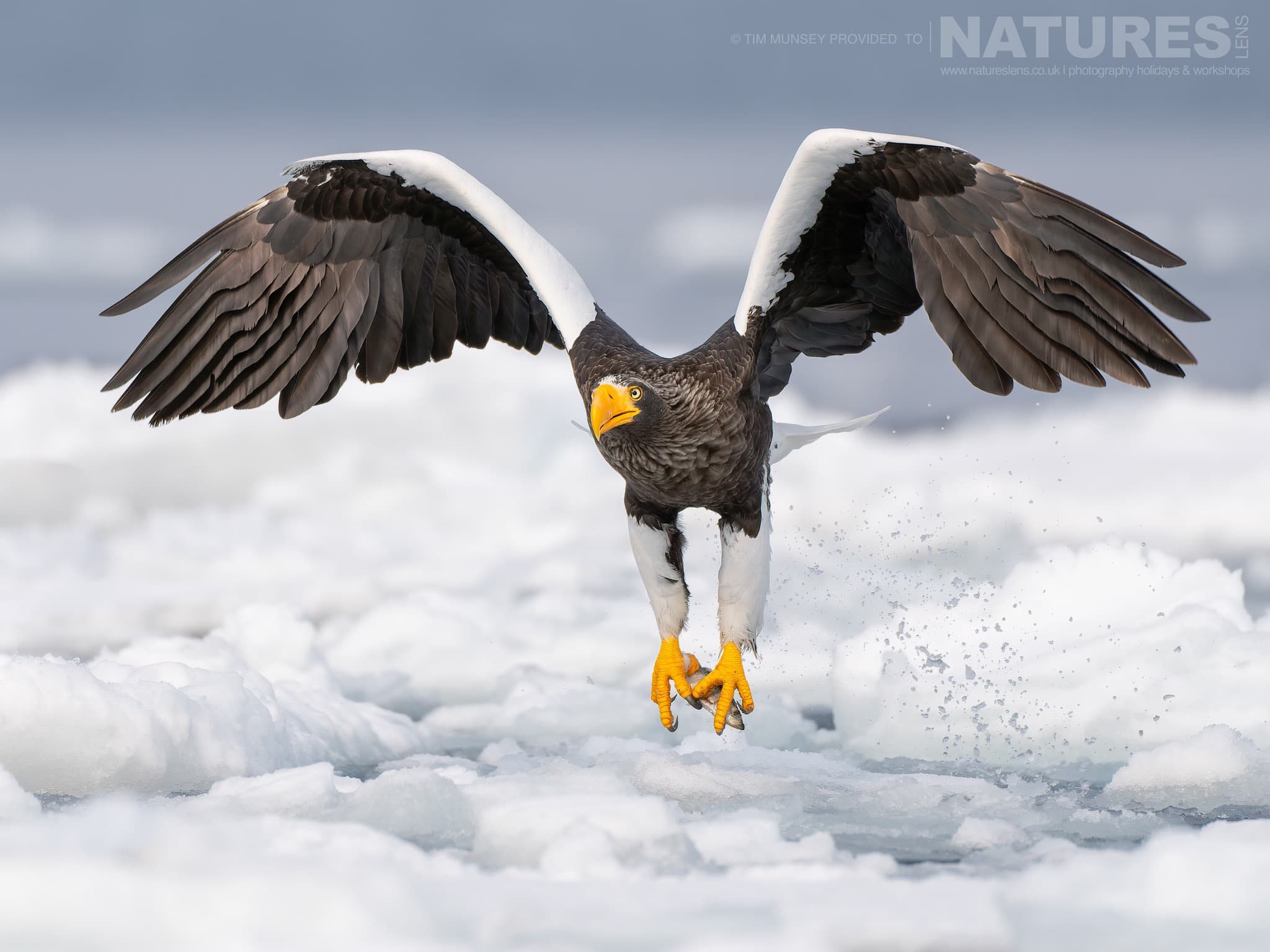
Our Amazing Japanese Wildlife in Winter photography tour runs for fourteen nights in February 2027, with a maximum of six guests, & brings together several species which could each justify a trip in their own right: Japanese Macaques, Red-crowned Cranes, Whooper Swans, Steller’s Sea Eagles & White-tailed Eagles amongst them.

What makes the journey work photographically is not merely having those species on an itinerary. It is the amount of variation they give us. Snow Monkeys can produce intimate behavioural photographs, portraits & wider frames showing them within their winter environment. Cranes give us delicate courtship behaviour, movement & extraordinary opportunities when mist or falling snow changes the landscape. The eagles are altogether more explosive, particularly when birds begin competing around food or moving rapidly through the winter sky.
Even the Whooper Swans offer something quite different again, especially when soft light, snow or mist simplifies the scene.

That is why we have always resisted turning Japan into a race around as many wildlife sites as possible. There are inevitably other species we might see, but the principal purpose is photography. If conditions are excellent with a productive subject, I would much rather spend time making progressively better images than leave simply because another name could be added to a list elsewhere.
What draws us back to the forests of Sweden & the Arctic coastline of Varanger?
As winter begins to loosen its grip, we move progressively north, first to Sweden during March & then to Arctic Varanger in early April. What I particularly like about these two holidays is that both involve northern wildlife, yet the photographic experience is completely different.
The Northern Sweden’s Eagles in Winter photography holiday is based around Skellefteå, where Robin & Conny work from established hides for Golden Eagles, White-tailed Eagles & other forest wildlife. Five nights gives us time to settle into the rhythm of hide photography rather than treating each session as a single chance.

Golden Eagles against snow are among those subjects where the background makes a profound difference. Their plumage can disappear remarkably effectively against brown vegetation, whereas winter can isolate every feather. The challenge then becomes composition & behaviour: resisting the urge simply to fill the frame, watching interaction between birds & leaving space for the landscape when the conditions justify it.

Our Winter Wildlife of Arctic Varanger photography holiday takes that idea of photographing animals within winter even further. The April 2027 journey runs from Kirkenes through the Varanger Peninsula towards Vardø & Hornøya, at the moment when winter remains firmly visible but returning birdlife is beginning to transform the coast. Steller’s Eider, King Eider, Arctic Hare, seabirds, Ptarmigan, White-tailed Eagle & other northern species can all contribute to a remarkably varied portfolio.
This is where landscape becomes inseparable from wildlife photography. Snow, sea, rock, changing weather & Arctic light are not inconveniences to photograph around; they are part of the photograph.
Which winter wildlife photography holiday in 2027 is right for you?
The answer depends much more upon the photographs you want to make than upon which species you most want to tick off. That is the way I would choose between these seven trips myself.
Białowieża appeals if you enjoy genuinely wild encounters, forests, mammals & the patience involved in never quite knowing what will emerge. Lake Kerkini is almost the opposite: an opportunity to spend concentrated time refining photographs of one extraordinarily photogenic species. The Hortobágy & northern Sweden reward photographers who enjoy long hide sessions & the sudden intensity of eagle behaviour, while Pusztaszer offers the control & visual polish that comes from exceptionally well-designed photographic hides.
Japan is the choice for sheer portfolio diversity, bringing together some of the world’s most recognisable winter wildlife within one extended journey, while Varanger is perhaps the strongest choice for photographers who want the Arctic environment itself to become a major part of their images.
What connects all seven is something we have learned repeatedly while running NaturesLens holidays: successful wildlife photography needs time. It needs the freedom to remain with a subject when the light improves, to try a different composition after the obvious photograph has been made, to wait for behaviour rather than merely recording presence & occasionally to abandon the plan because wildlife or weather has presented something better.
That philosophy matters even more in winter because conditions can transform an ordinary scene incredibly quickly. Falling snow, mist, frost, reflected light or a few minutes of colour near sunrise can completely alter the photograph in front of you.
For me, that is ultimately why winter remains one of the most exciting seasons in which to photograph wildlife. It does not simply give us different subjects. It gives familiar subjects an entirely different world in which to be photographed - & in 2027, these seven holidays give us seven very different ways to explore it.