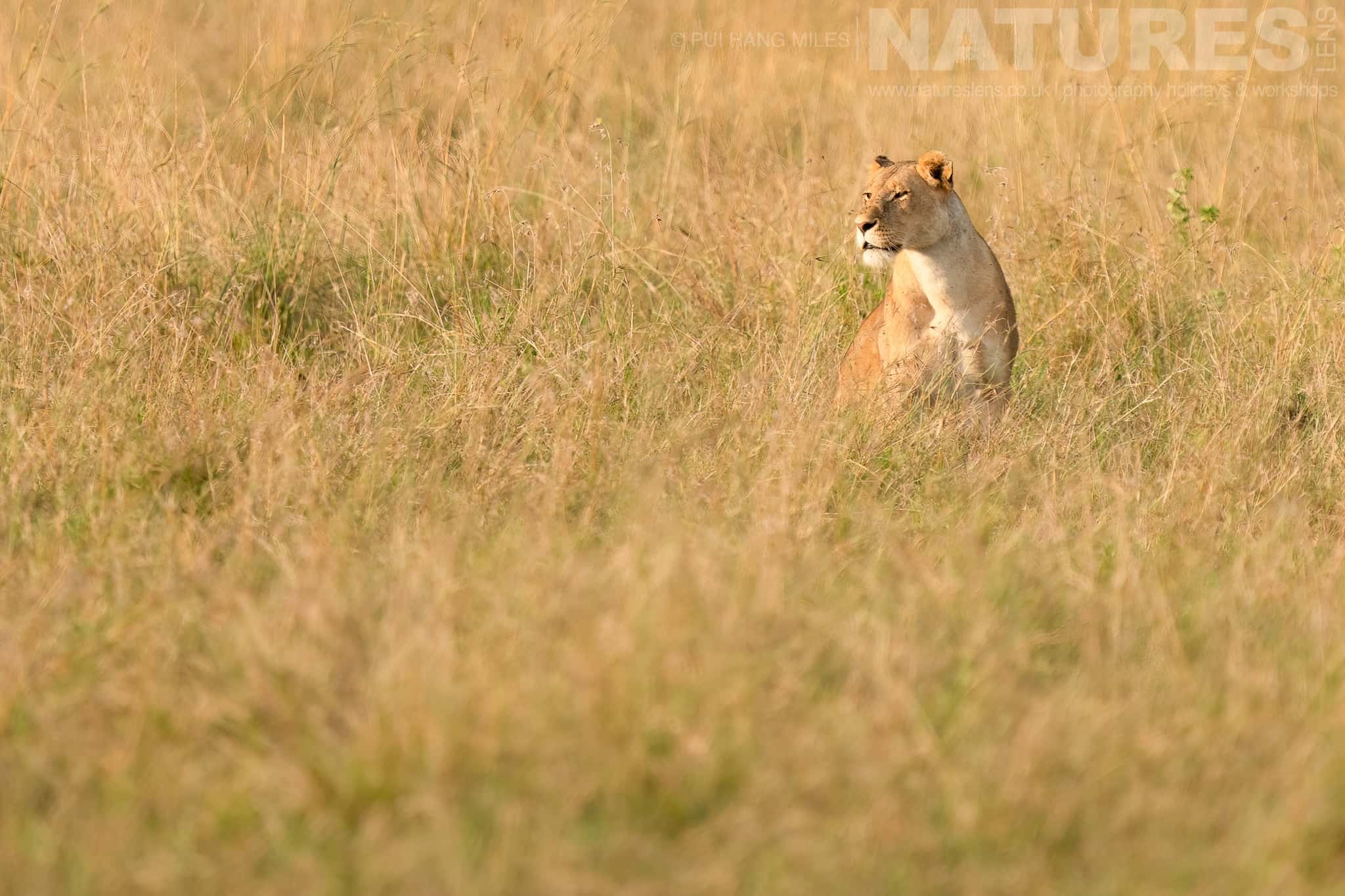
The Maasai Mara is the destination every wildlife photographer thinks they already know, & that reputation is exactly why we built our newest Kenya trip somewhere most visitors never reach. Lemek Conservancy sits immediately outside the National Reserve’s boundary, sharing the same open savannah, the same predator populations & the same herds of plains game, but carrying a fraction of the vehicle traffic that can turn a Mara sighting into a scrum. Our Wildlife of the Lemek Conservancy photography holiday, staying at the small Spirit of Tembo camp, is built entirely around that difference. This is about why the conservancies, rather than the reserve itself, are where returning photographers increasingly want to be.

What actually separates a conservancy from the Maasai Mara National Reserve?
Lemek Conservancy is part of the wider ecosystem the Mara belongs to, unfenced & connected to the same migration routes & resident predator territories, but it operates under a strict vehicle cap agreed between the conservancy & the handful of camps permitted to operate there. In practice that means a lion sighting inside the reserve during peak season can draw a dozen or more vehicles jostling for angle, while the same sighting in Lemek might involve two, ours included, with room to move for the light rather than fighting for a gap in the circle. That single structural difference changes almost everything about how a photography trip here can be planned, because sessions are not rushed by the pressure of other vehicles waiting their turn.
Why does off-road driving matter so much for composition?
Conservancies permit off-road driving in a way the National Reserve generally does not, which sounds like a small operational detail until you are the one trying to work a low angle on a resting lioness from a fixed track rather than positioning the vehicle exactly where the light & the background align. Being able to move ten or fifteen metres off the road to get sun behind rather than beside a subject, or to drop the topi herd’s silhouette against open sky rather than a distant tree line, is the difference between an acceptable record shot & an image worth printing. It is a freedom guests who have only photographed from fixed reserve tracks notice immediately, & it reshapes how deliberately you can build a frame rather than simply reacting to whatever angle the road happens to offer.
Why add night drives to a Mara-area trip at all?
Night photography is not permitted inside the National Reserve, which makes it one of the conservancies’ clearest advantages: African Civet, genet & the occasional hunting hyena become properly photographable once light-controlled night drives come into the itinerary, opening up a nocturnal layer to the ecosystem that daytime-only reserve trips simply cannot offer. Hyena cubs, tumbling & play-fighting near a den entrance in the low early evening light, are one of the more charming subjects the conservancy consistently produces, & watching a family group relax around a vehicle that has clearly caused them no trouble on previous visits is a different kind of encounter to a brief daytime drive-past.
This is a genuinely new trip for us, first departure scheduled for August 2027, so there is no returning-guest history to point to yet the way there is with Chobe or the Mara’s own older itinerary. What there is, instead, is a guide, Pui Hang, who has spent time in Lemek scouting exactly where the resident pride territories sit relative to the camp & how the conservancy’s low-density model changes the pace of a working day, & that groundwork is what gives me confidence recommending it before a single guest has been. It sits in exactly the position Shompole & Varanger occupy elsewhere in this series, new, carefully prepared, & already showing every sign of becoming a trip people ask to repeat.
What does a small camp change about the pace of the trip?
Spirit of Tembo holds only a handful of tented suites, & that intimacy carries through into how the whole itinerary is run: rather than a fixed safari schedule ticking through set game drive times, sessions are built around what the light & the wildlife are actually doing, extending a productive sitting with a hunting pride well past a scheduled return time, or heading out earlier than planned when a dawn mist promises strong backlit conditions over the plains. That flexibility, only really possible with a camp & group this size, is what lets four to six photographers work a single scene properly rather than moving on because the schedule says so.
What other subjects does the conservancy offer beyond the big cats?
Topi, one of the more overlooked plains antelope, gather here in numbers that produce genuinely striking images when a small group lines up silhouetted against a rising sun, & they are common enough across Lemek that a photographer can afford to be patient with composition rather than fire off a single hurried frame before the herd moves on. Warthog families, hippo working the conservancy’s waterholes & the wider mosaic of open savannah & riverine woodland all add variety to a working day that never rests entirely on predator sightings alone, which matters because predator encounters, however consistent, can never be guaranteed on any single drive. Cheetah & leopard both use the conservancy’s territory alongside the resident lion prides, & the low vehicle density that benefits a lion sighting applies equally when a cheetah is working open ground for a hunt, giving a genuinely uninterrupted view of behaviour that a crowded reserve sighting would compress into a matter of seconds before other vehicles closed in.
Who tends to get the most from this particular trip?
It suits photographers who already have some safari experience & are looking for calmer, less crowded conditions in which to properly work predator behaviour rather than collect a first set of African wildlife images. The group is capped at six specifically to keep vehicle positioning flexible for everyone, & it particularly suits anyone who has found a previous Mara-area trip frustrating because of vehicle density around good sightings, since that is precisely the problem the conservancy model is built to solve. It is less suited to guests chasing the absolute highest concentration of animals in the shortest window, since that remains, for now, the reserve’s own advantage during peak migration season.
So why will photographers keep returning to the Maasai Mara conservancies?
Because the space & quiet that conservancy access buys is not something you get tired of; once you have photographed a lion sighting with room to move rather than six vehicles for company, the reserve’s crowded peak season starts to look like the compromise rather than the destination itself. That instinct runs through the wider case we make for wildlife photography in Kenya in why photographers are drawn to Kenya, & you can read more about the ecosystem’s habitat & species in our field guide to the Maasai Mara. If you would like to talk through an August departure, get in touch & Pui Hang will explain how the conservancy access changes what is possible.