
Fair Isle is the smallest, most remote inhabited island in Britain, a scrap of cliff & croftland sitting halfway between Orkney & Shetland, & it has held a place in our Scotland collection for ten years now precisely because so few places pack this much seabird photography into so small a space. Our Atlantic Puffins of Fair Isle photography holiday, running every June since 2016, has become one of the trips we see guests book a second & third time, sometimes bringing a partner or a friend who has heard enough about it to want to see for themselves. This is about what keeps drawing photographers back to an island you can walk across in an afternoon.

Why does an island this small hold so many breeding seabirds?
Fair Isle’s cliffs rise sheer & largely undisturbed straight out of the North Atlantic, & that isolation, combined with an almost complete absence of ground predators, is exactly what allows Atlantic Puffin, Razorbill, Common Guillemot & Black Guillemot to nest here in numbers that would be impossible on a more accessible stretch of mainland coast. Northern Gannet & European Shag work the surrounding waters alongside Northern Fulmar riding the cliff updrafts, & the sheer density of birds using such a compact footprint of cliff & clifftop means a working session rarely involves much walking between subjects, everything you need is stacked within a short stretch of coastal path.
Why do puffins here allow such close, unhurried photography?
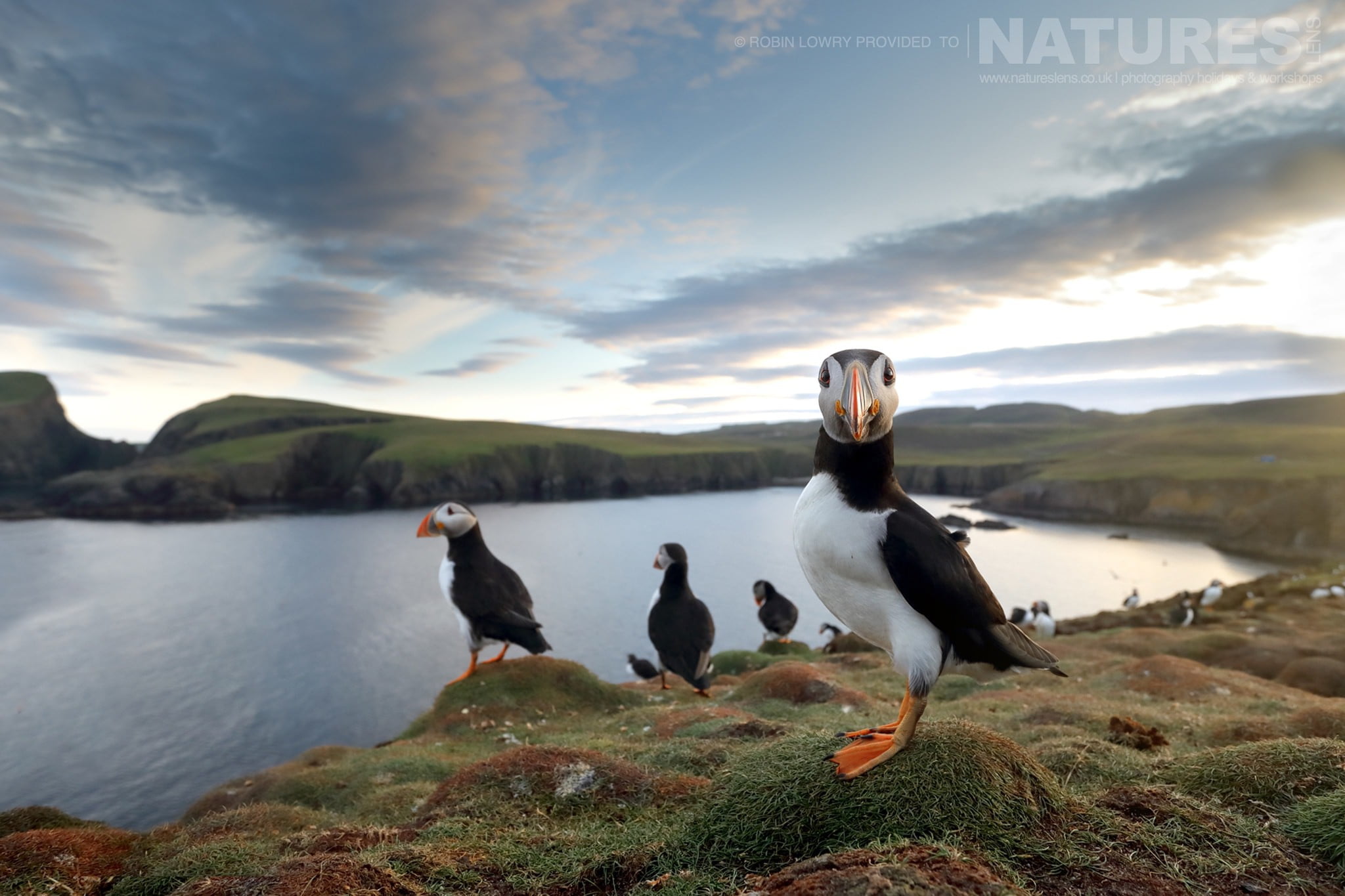
June puts us squarely in the puffins’ breeding season, when adults are ferrying sandeels back to burrows dug into the thin turf along the clifftop, & because Fair Isle’s puffins have nested undisturbed by ground predators for generations, they show a tolerance for a quietly positioned photographer that birds on more exposed mainland colonies simply do not. Lying low at eye level with a burrow entrance, waiting as an adult returns beak-full of silver sandeels against a backdrop of sea & sky, produces exactly the kind of intimate portrait that first drew Robin, who has guided this trip from the outset, to keep bringing groups back year after year. That proximity is earned through stillness rather than luck; sudden movement or a raised voice will send birds diving for the burrow long before a useful frame presents itself. Getting the angle right matters as much as the proximity, working low with a wide aperture to soften the sea behind an incoming puffin rather than letting a busy background compete with a bird that is, in its own understated way, already a striking subject through colour alone.
What makes the seabird cliffs work so well for flight photography?
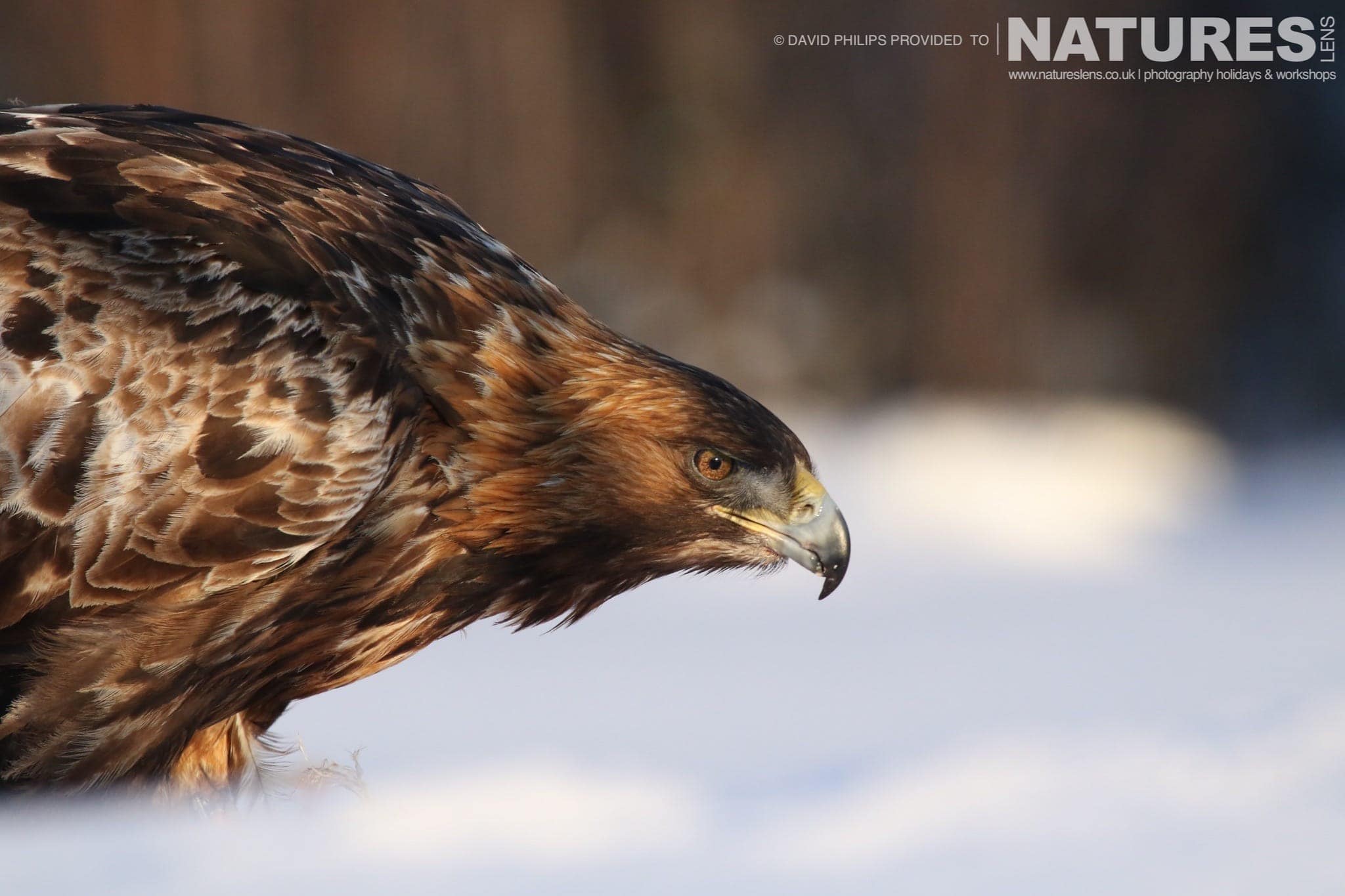
Beyond the puffins, the cliffs themselves become a working flight-photography classroom: Arctic Tern & Arctic Skua both defend territory aggressively enough that their flight paths become genuinely predictable across a session, while Great Skua, one of the more powerfully built seabirds in British waters, patrols the same airspace looking for an opportunity to rob a returning puffin of its catch. Learning to track a skua’s pursuit of a puffin against open sky, panning smoothly enough to hold focus through an genuinely unpredictable chase, is a skill this island teaches faster than almost anywhere else we run trips, simply because the opportunities repeat so often across a single week.
Weather at this latitude changes quickly, & rather than treating that as an obstacle, the itinerary is built to use it: a grey, even sky flattens contrast across a cliff face in a way that suits documenting nesting behaviour without harsh shadow, while a clear evening brings long, low light that rakes across the clifftop turf & rims a puffin’s plumage in warm gold. Guests who have done the trip more than once often talk about how differently the same colony reads under different weather, & that variability, frustrating as it can be for planning, is part of why a second visit rarely feels repetitive.
Why does Fair Isle reward more than one visit?
A first trip here tends to be dominated by the sheer novelty of the puffin burrows & the closeness of the encounters, but guests returning for a second or third June increasingly talk about the skua chases, the shag nests tucked into narrow ledges, & the quieter satisfaction of finally nailing a clean gannet-in-flight frame against open water. Ten years of running this trip has taught us which stretches of cliff produce which behaviour at which point in June, & that accumulated knowledge, passed on through Robin’s guiding, is exactly what a returning guest benefits from that a first-timer cannot access in a single week.
How does Fair Isle’s isolation shape the whole week, not just the photography?
Getting to Fair Isle at all involves either a small plane from Tingwall or a boat crossing that does not run in poor weather, & that isolation is part of what has kept the island’s colonies as undisturbed as they are; it simply is not a place that absorbs casual day-trip pressure the way a mainland reserve can. The island supports a resident population of around sixty people, a working croft landscape alongside the bird observatory, & staying somewhere this self-contained for the better part of a week changes the pace of the whole trip in a way a mainland base rarely does, there is nowhere else to be, no alternative itinerary competing for attention, just the cliffs, the light & the birds. Guests consistently tell us that settling into that rhythm, dictated entirely by tide, weather & bird activity rather than a fixed schedule, is as much a part of what they come back for as the puffins themselves.
Who tends to get the most from this particular trip?
It suits photographers who enjoy working a compact, walkable landscape intensively rather than covering wide distances, & who are comfortable with genuinely changeable North Atlantic weather. The group is kept to between five & seven photographers, small enough to move along the narrow clifftop paths without disturbing the colonies, & it particularly suits anyone building a dedicated seabird portfolio who wants close, repeatable access to burrow-nesting & cliff-nesting species within the same short trip.
So what keeps photographers coming back to Fair Isle?
It is the density of it all: an island small enough to properly get to know, & seabird colonies generous enough that a second or third June still turns up new behaviour to photograph. That instinct sits alongside the wider case we make for wildlife photography in Scotland in why photographers are drawn to Scotland, & you can read more about the island’s habitat & species in our field guide to Fair Isle. If you would like to talk through a June departure, get in touch & Robin will explain what the cliffs are offering this season.