

A Journey Through Norway’s Varanger Peninsula & Finnish Taiga
A group of passionate photographers, including Alison, who will be leading our 2026 version of the Arctic Wildlife & Winter Wildlife of Arctic Varanger wildlife photography tour, recently completed this route, covering Norway’s Varanger Peninsula & the Finnish taiga over seven days. They photographed rare birds, large mammals, & coastal seabird colonies across the full itinerary. This report covers what they found, the species photographed, & the conditions they worked in.

Day 1 - Arrival in Ivalo & Finnish Taiga Birding
The trip started in Ivalo, Finland, with a drive to Kaamanen for the first session. The snowy taiga forests & streams here hold a concentration of Arctic specialists that are otherwise hard to pin down:
- White-throated Dippers - Working the edges of icy streams, diving repeatedly. A 500mm lens & fast shutter speed (1/2000s or above) were needed to freeze their movements.
- Siberian Jays - Confiding birds that perched within a few metres, their fluffed plumage ideal for tight portraits even with shorter lenses.
- Pine Grosbeaks & Arctic Redpolls - Feeding on buds & berries. The red & pink plumage against clean white snow made for strong, simple compositions.

After a productive first session, the group transferred to Kongsfjord, Norway, on the Barents Sea coast.
Day 2 - Berlevåg - Eagles, Falcons & Sea Ducks


The coastal village of Berlevåg produced strong raptor & sea duck opportunities:
- White-tailed Eagles - Perched on coastal rocks & making repeated fishing runs, giving good chances for flight-to-catch sequences.
- Gyrfalcons - The world’s largest falcon, hunting low across the tundra. Tracking them at speed takes practice, but the open terrain helps.
- Steller’s, King & Common Eiders - Flocks diving in sheltered bays. The males are some of the most photogenic sea ducks you will find anywhere.
- Long-tailed Ducks - Swimming in small groups close to shore, their long tail streamers & pied plumage making them a favourite subject.
The day finished with a herd of Reindeer crossing snow-covered plains - good for environmental shots with a 70-200mm.
Day 3 - Båtsfjord - Ptarmigans, Moose & More Sea Ducks

At Båtsfjord, the focus shifted to Arctic grouse & larger mammals:
- Rock Ptarmigans - Almost invisible against the snow in their winter plumage. Patience & careful scanning were needed to spot them foraging on lichens.
- Moose - A solitary bull browsing at the taiga’s edge. Its sheer size filled the frame even at moderate focal lengths.
- King & Steller’s Eiders - Further sessions with these sea ducks in icy waters, building on the previous day’s work.


Day 4 - Vardø & Hornøya Island Seabird Colony

The move to Vardø & the nearby Hornøya Island opened up one of Europe’s most accessible seabird colonies:
- Northern Hawk Owls - Perched on prominent lookout posts, scanning for voles. They tend to stay put, so there is time to set up carefully.
- Bohemian Waxwings - Flocks dropping into berry-laden trees, often close enough for frame-filling shots at 400mm.
- Puffins, Common & Thick-billed Murres, Razorbills, Black-legged Kittiwakes & European Shags - The cliffs were busy with constant activity - puffins returning with fish, murres jostling for ledge space. Plenty of behavioural opportunities.


A boat trip & landing on Hornøya put the group within close range of nesting seabirds - ideal for tight portraits & behavioural work.


Day 5 - Return to Hornøya & Journey Back to Kaamanen
A return visit to Hornøya gave the group a second morning on the colony, this time concentrating on:
- Common & Brünnich’s Guillemots - Rafting offshore before flying back to the cliffs, giving flight & landing opportunities.
- Puffins & Shags - More behavioural work: preening, bill-fencing, & territorial displays.


The afternoon was a long transfer back to Kaamanen, with stops along the way for wide-angle Arctic landscape work.
Day 6 - Ekkerøy Cliffs, Vadsø Harbour & Mountain Hare
A pre-dawn start put the group in position at Ekkerøy Cliffs for:
- Black-legged Kittiwakes - Wheeling against low-angle golden light, ideal for rim-lit flight images.
Later, at Vadsø Harbour, they photographed:
- Steller’s & Common Eiders - Calm, sheltered water here meant clean reflections beneath the birds.


The day finished with a close encounter with a Mountain Hare - white coat against white tundra, a real test of exposure compensation to hold detail in the fur.


Day 7 - Reindeer in the Taiga & Departure
The final morning was spent back in the Finnish taiga, where a herd of Reindeer grazing on lichens gave the group one last subject in soft, flat light. Cards full, they returned to Ivalo Airport to wrap up a productive seven days.
Species Photographed During The Arctic Wildlife & Winter Wildlife of Arctic Varanger Photography Holiday
Birds
- White-throated Dipper - Active along icy streams. Their constant diving demands shutter speeds of 1/2000s or faster.
- Siberian Jay - Confiding & approachable, often perching within a few metres.
- Gyrfalcon - Fast-moving hunter; the open tundra terrain helps with tracking in flight.
- Steller’s Eider - Tight flocks diving synchronously for molluscs. Good for action sequences.
- Rock Ptarmigan - Near-invisible against snow; careful scanning needed to locate them.
- Northern Hawk Owl - Diurnal hunter that holds position on prominent perches, allowing time to compose.
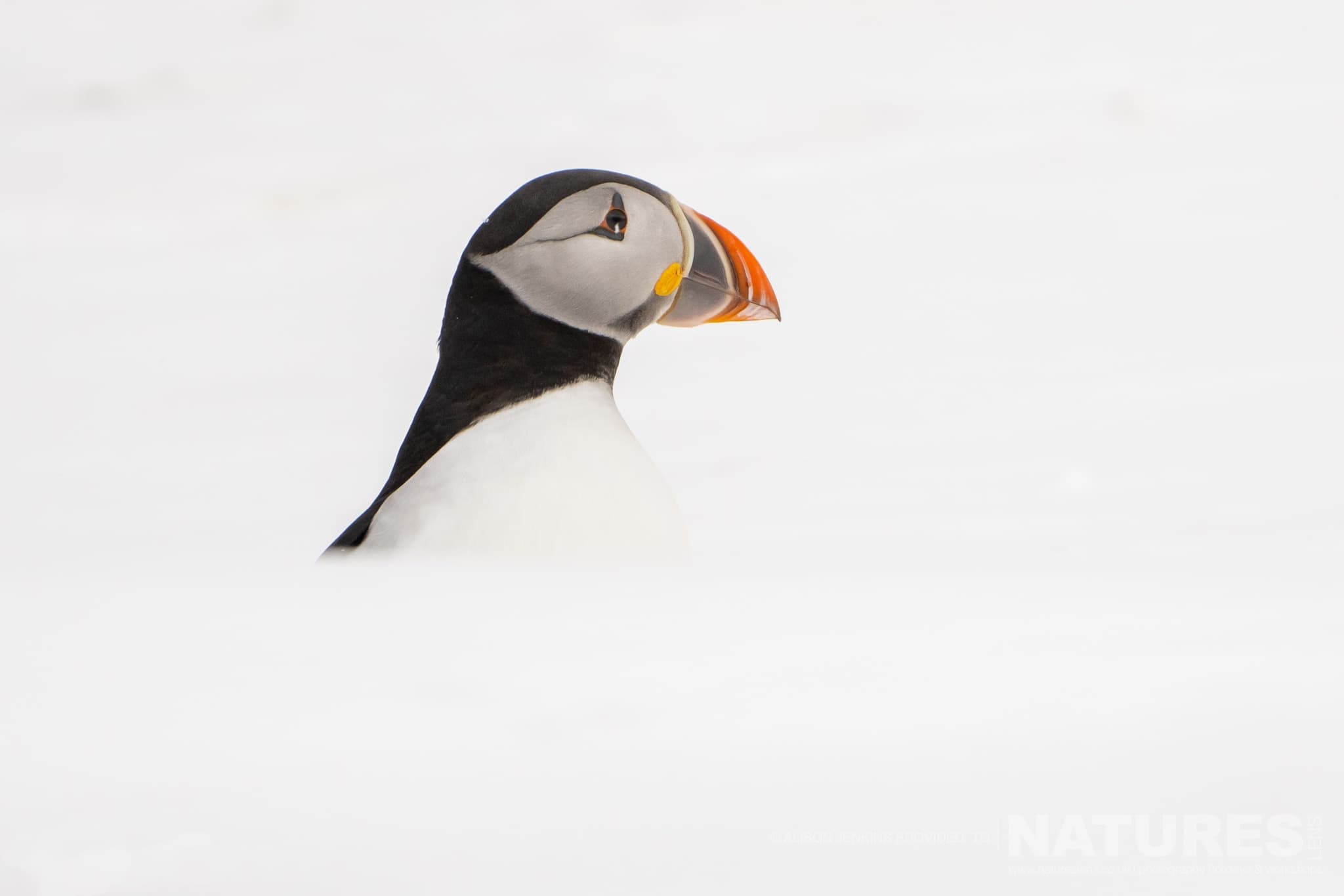
- Puffins - Confiding on Hornøya; ideal for portraits & behavioural work.
- Bohemian Waxwing - Flocks feeding on berries, often in soft overcast light that suits their subtle plumage tones.
Mammals
- Reindeer - Best photographed in soft morning light with a 70-200mm for environmental portraits.
- Arctic Hare - White on white; requires careful exposure work. Their slow movement allows time for considered framing.
Photography Tips & Challenges
- Equipment - A 500mm+ telephoto was essential for the birds, while a 70-200mm covered mammals & landscape work well.
- Lighting - The low Arctic sun barely clears the horizon, creating extended golden-hour conditions that last for hours rather than minutes.
- Patience - Waiting for raptors like the Gyrfalcon or White-tailed Eagle to hunt demands persistence, but the payoff is worth it.
- Weather Resilience - Sub-zero temperatures are a given. Weather-sealed bodies, chemical hand warmers, & proper layering are non-negotiable.
Final Thoughts
The Arctic Wildlife & Winter Wildlife of Arctic Varanger photography holiday for 2026 follows this same itinerary. You get close access to rare species in strong photographic settings - from the seabird cliffs of Hornøya to the taiga forests inland.
The combination of Arctic sea ducks, seabird colonies, raptors, & taiga passerines makes this one of the most varied winter trips we run.